Prints as evidence in natural philosophical discourse, 1640-1740
3. A visual tradition?
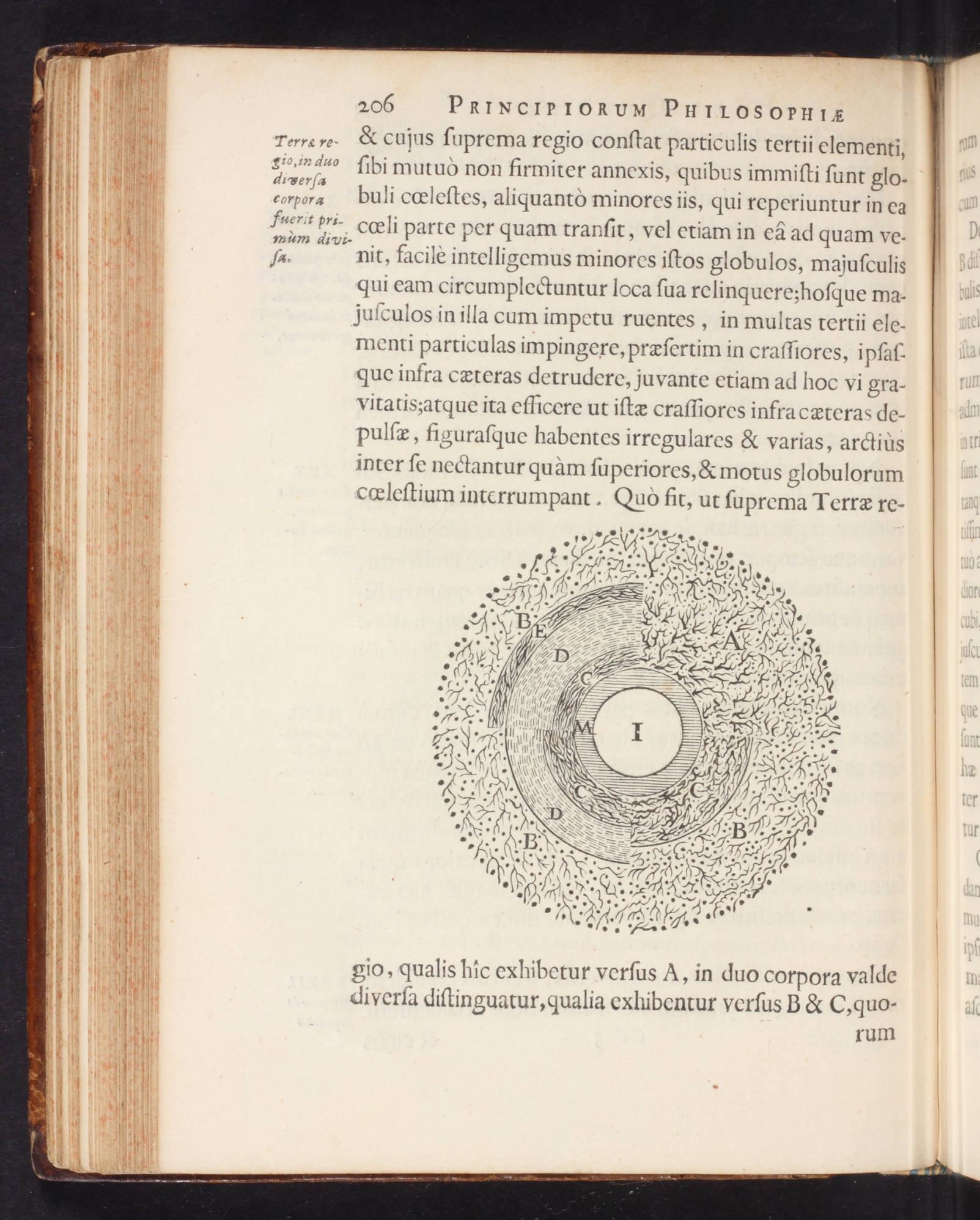
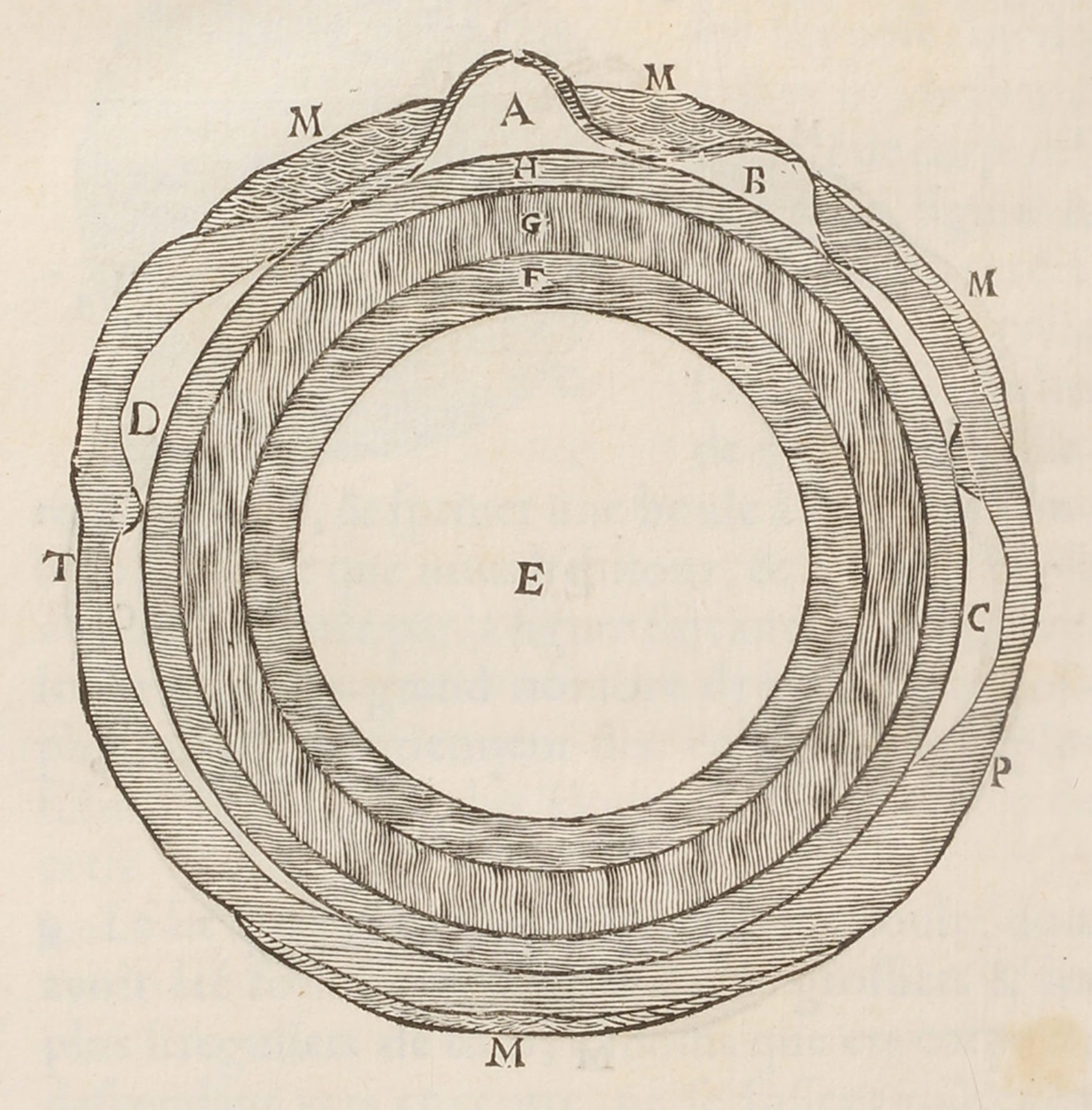
Section in quadrants of the earth from René Descartes’ Principia Philosophiae (Amsterdam, 1644). Courtesy of The Linda Hall Library of Science, Engineering & Technology, B1863.
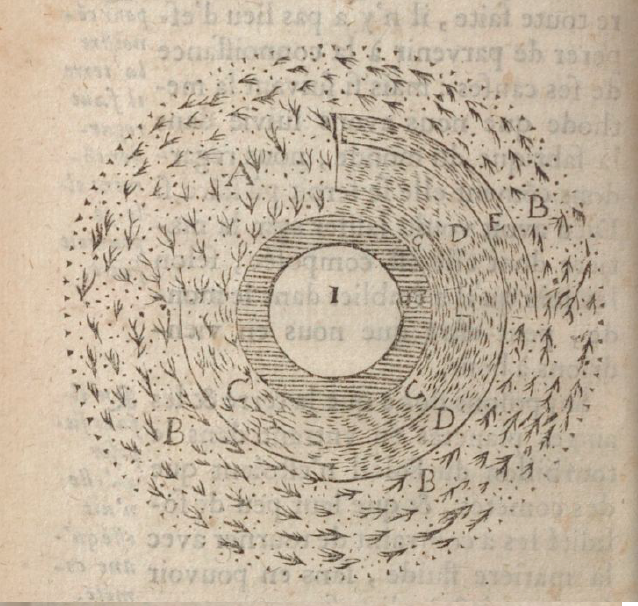
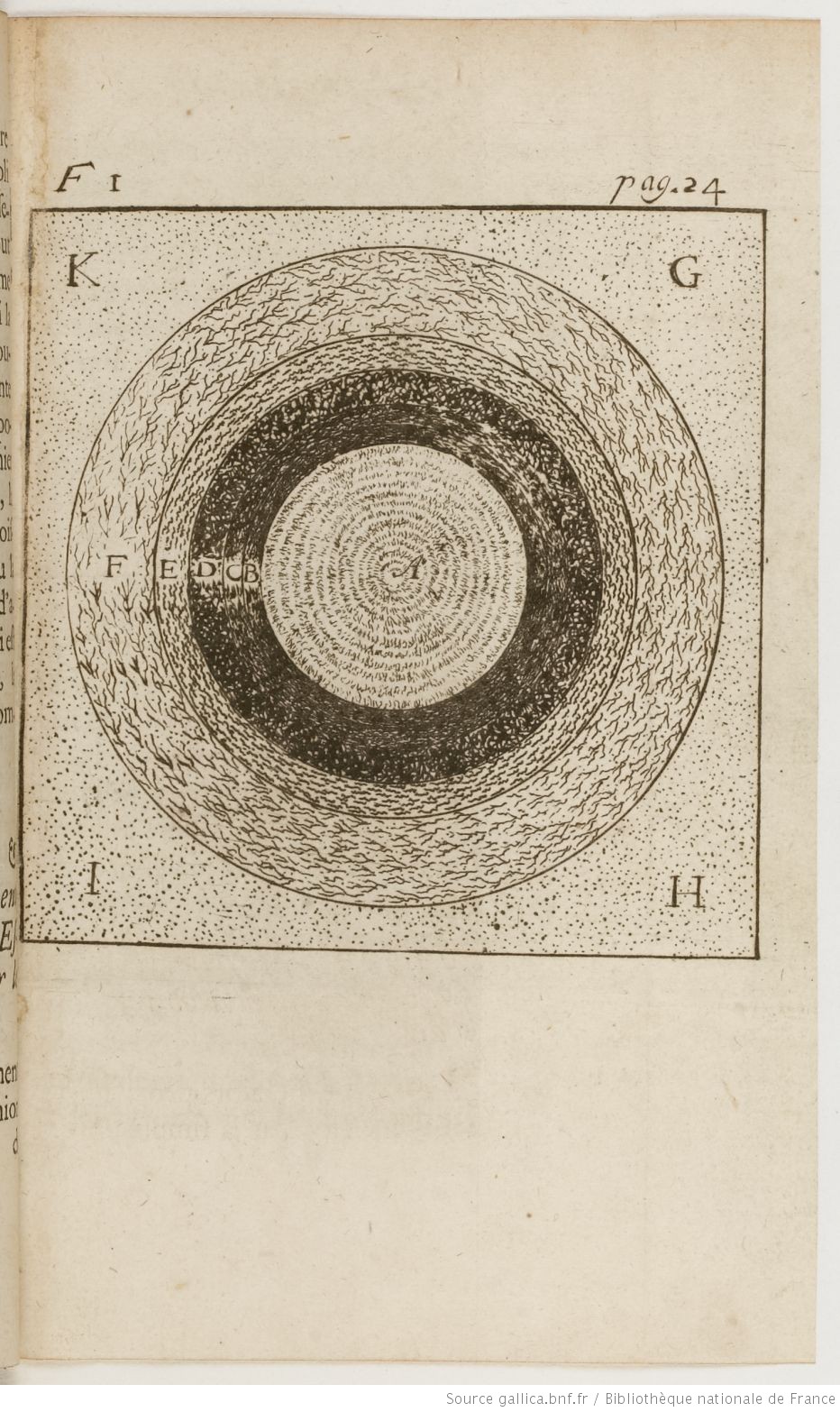
Section in quadrants of the earth from Jean-Claude Gadroys, Le Systeme du Monde (Paris, 1675). Source gallica.bnf.fr / BnF.
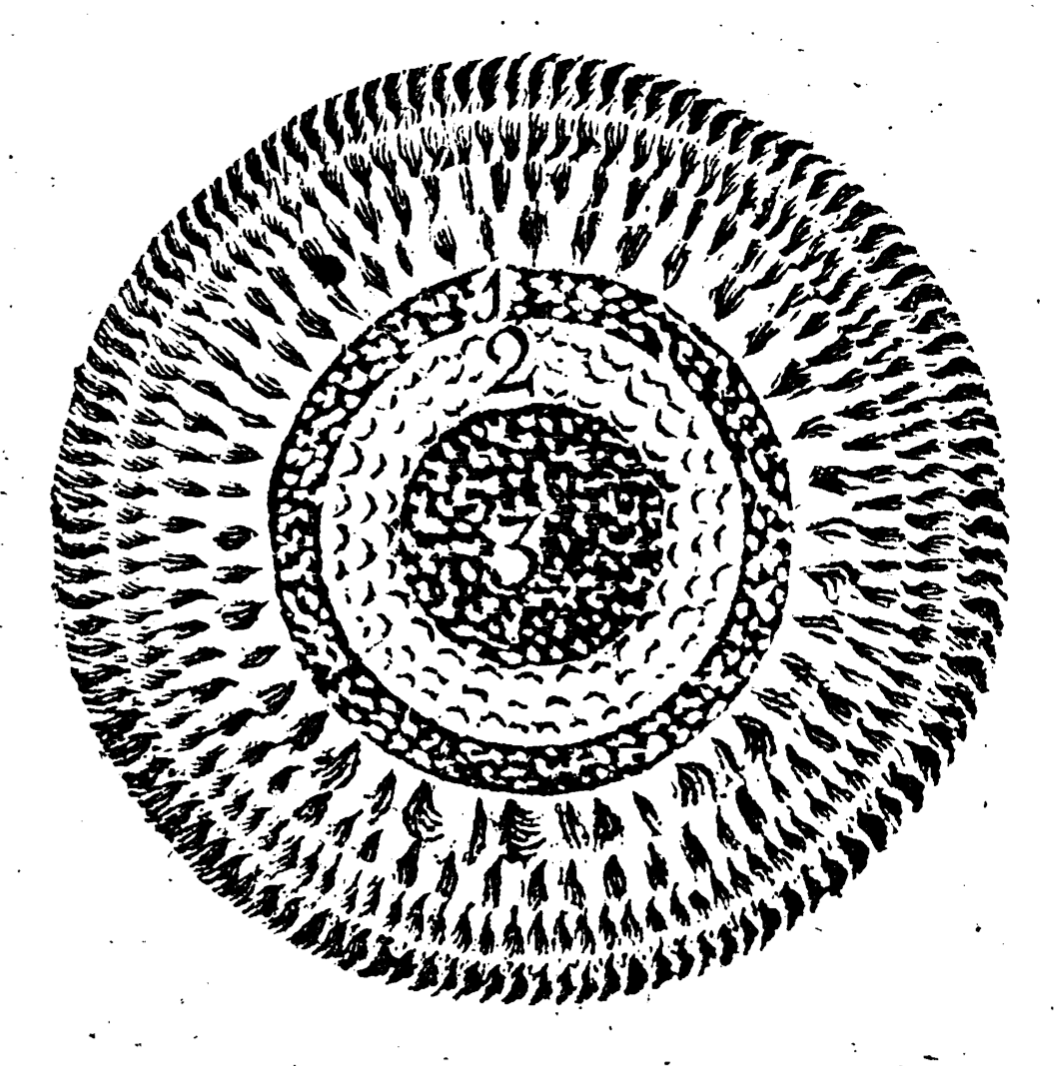
Section from Francis Walsh, The Antediluvian World (Dublin, 1743). Google Books.
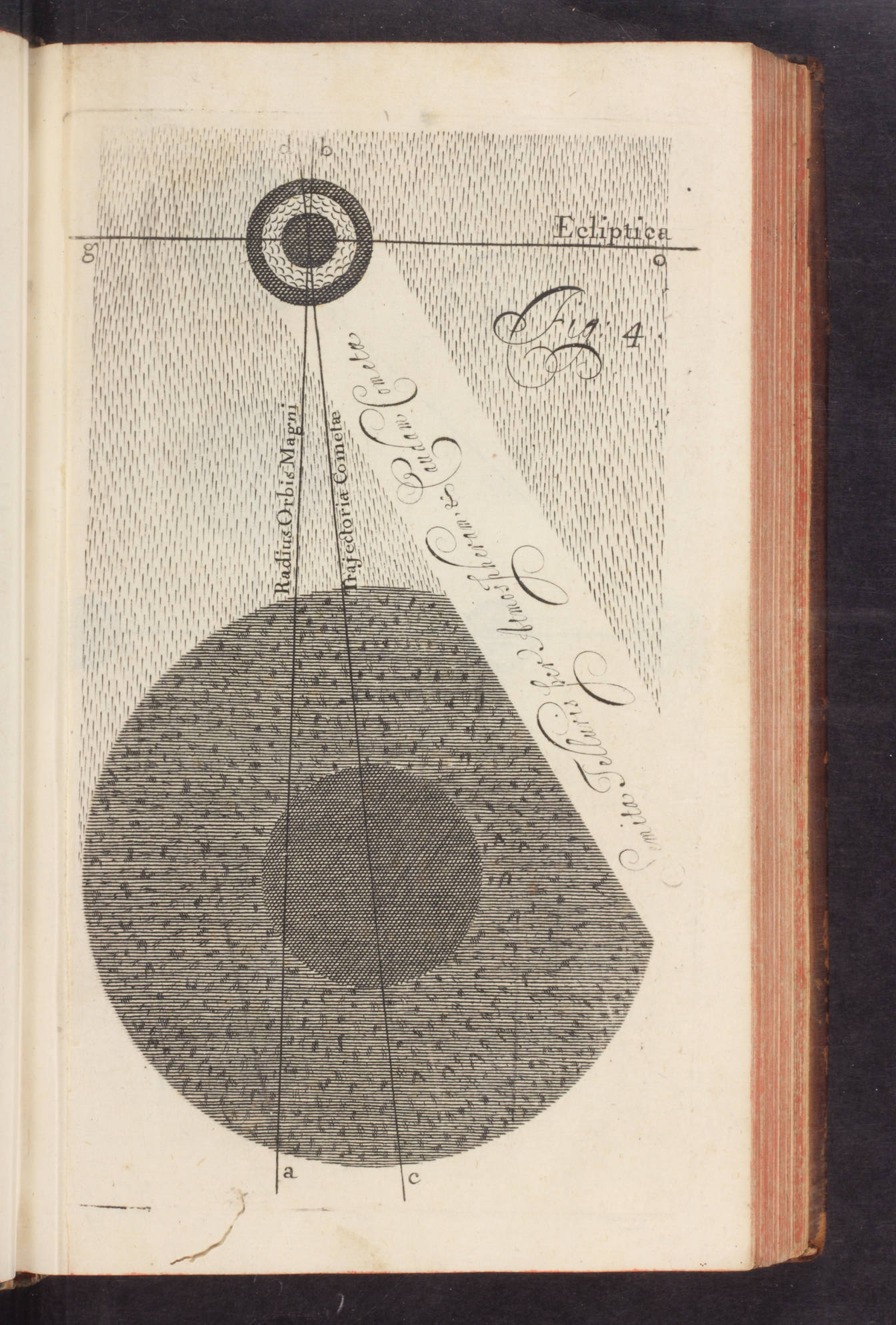
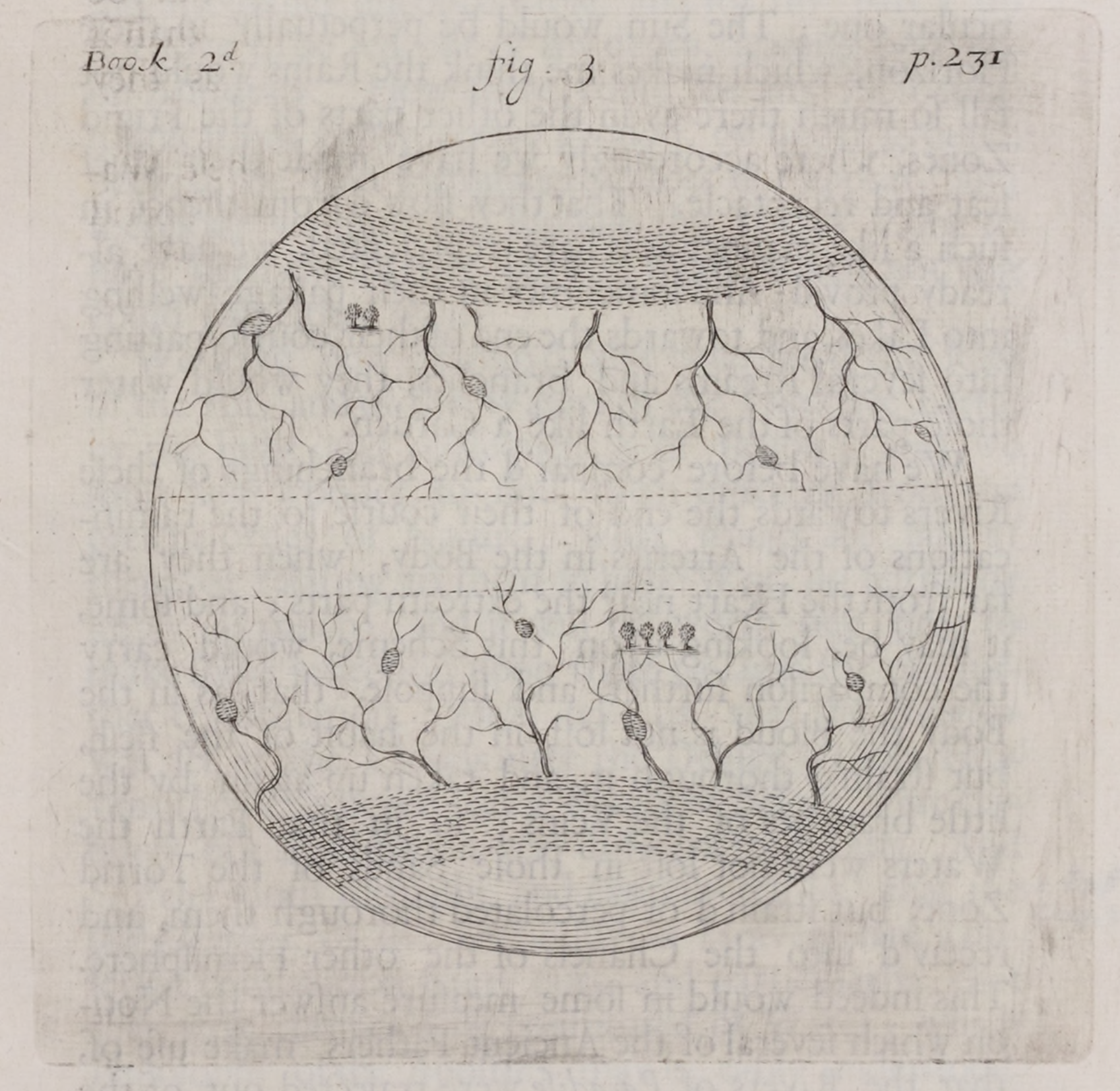
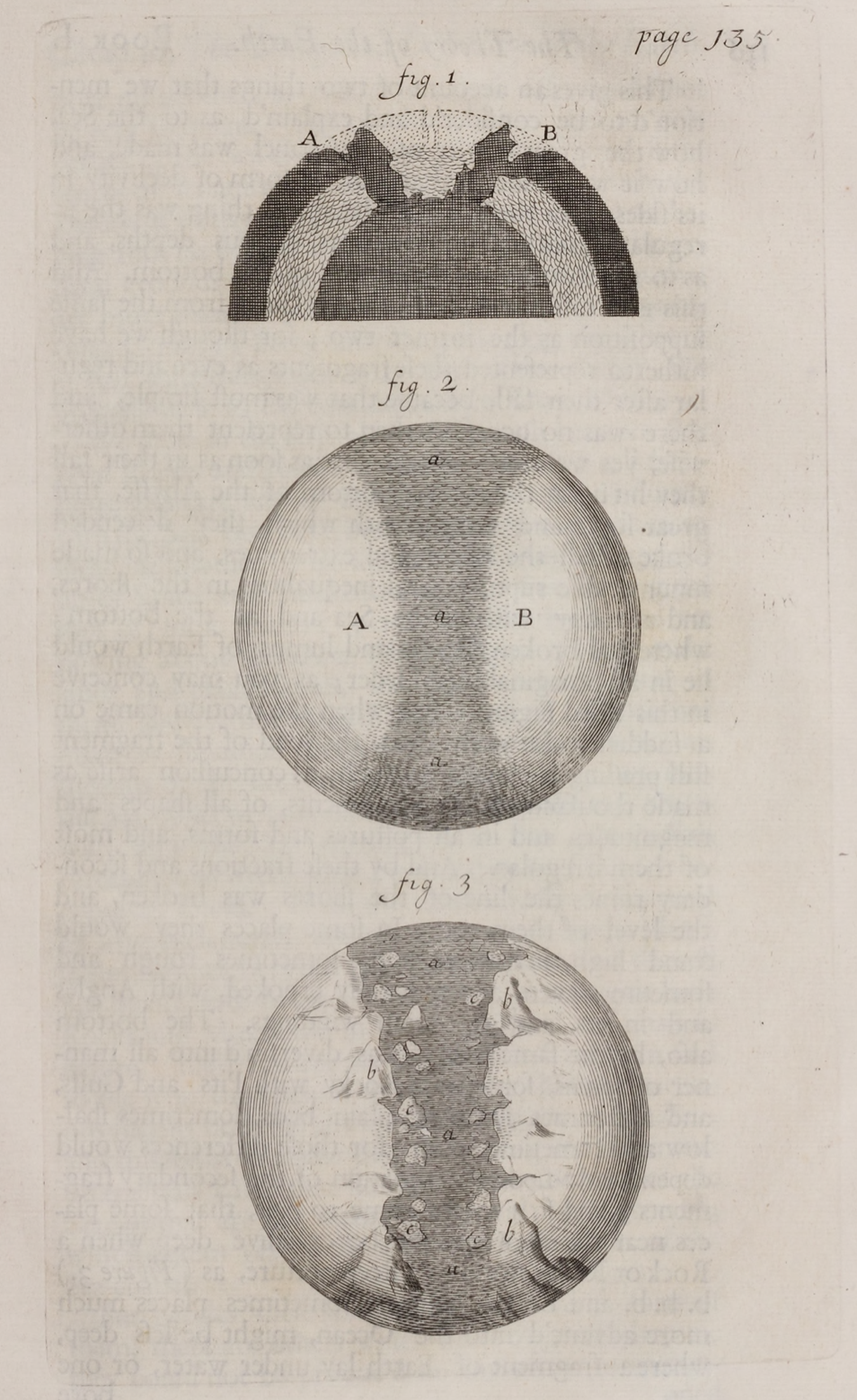
The fourth figure from William Whiston’ New Theory of the Earth (London, 1696). Courtesy of The Linda Hall Library of Science, Engineering & Technology, QH363 .W5 1696.
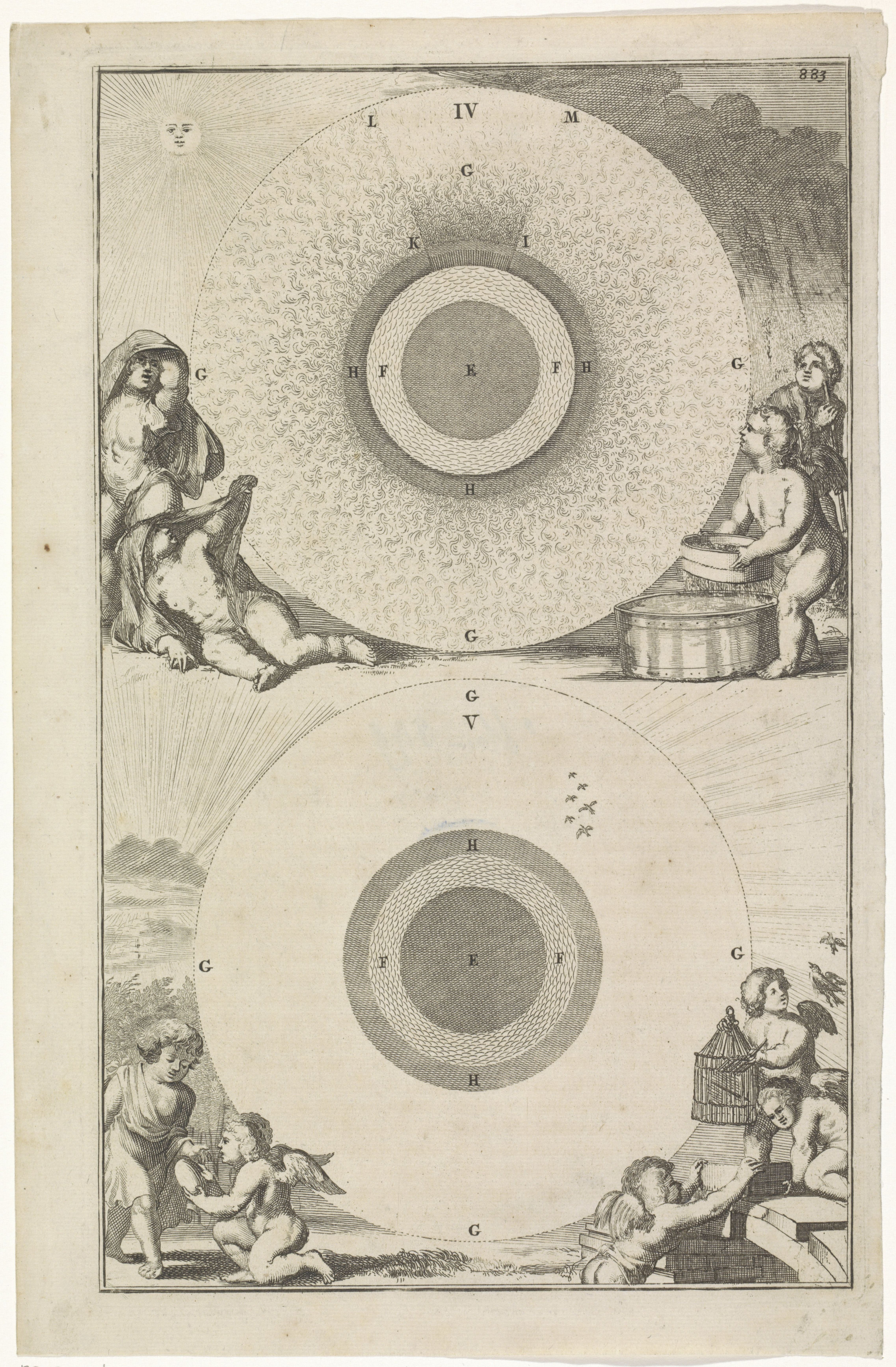
Close-up of a section from Willem Goeree’s Voor-bereidselen tot de Bijbelse Wijsheid (Amsterdam, 1690). Collection Rijksmuseum Amsterdam, RP-P-1916-399.
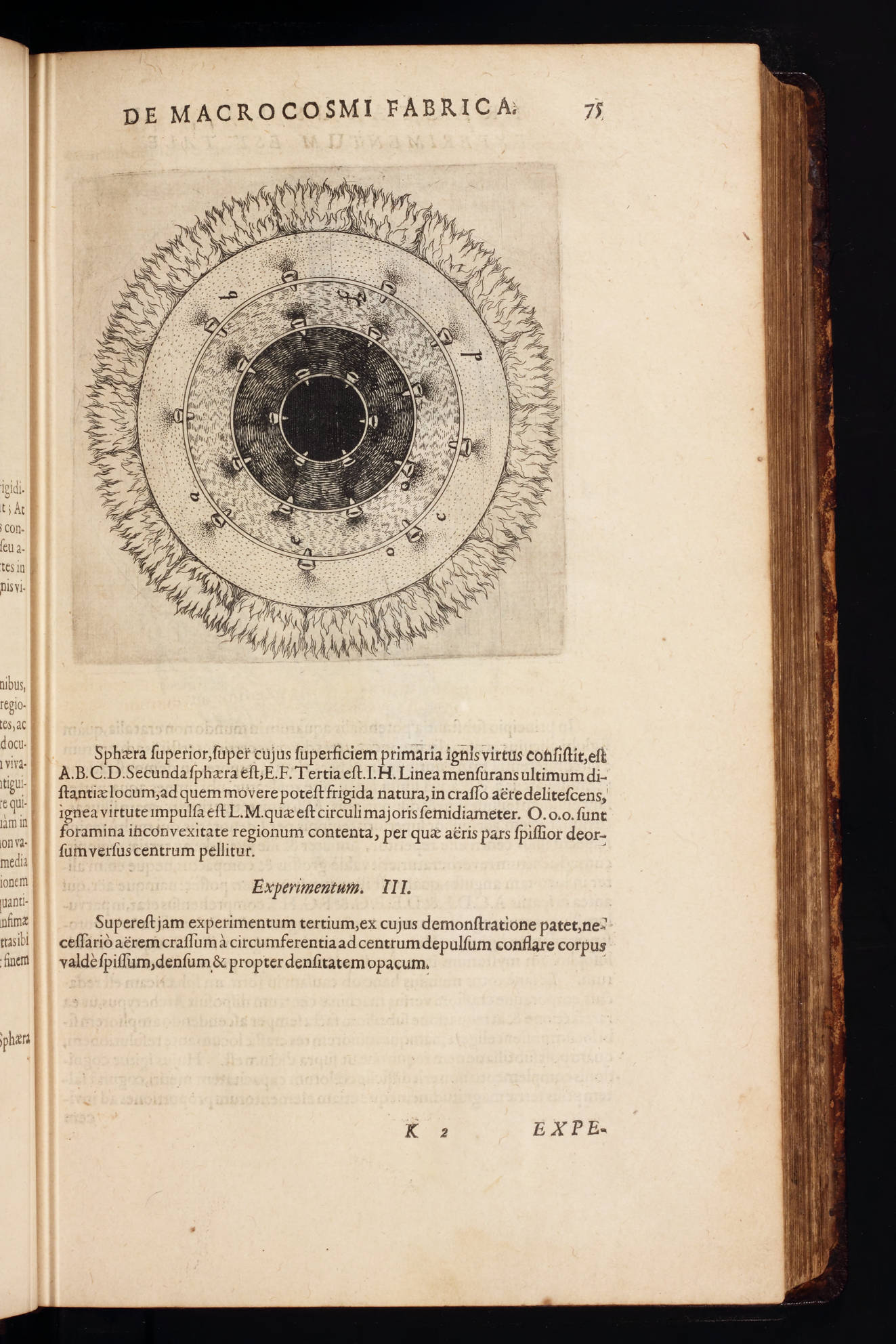
Experiment from Robert Fludd’s Utriusque Cosmi (Oppenheim, 1618). Courtesy of The Linda Hall Library of Science, Engineering & Technology, BD500 .F58 1617 quarto.
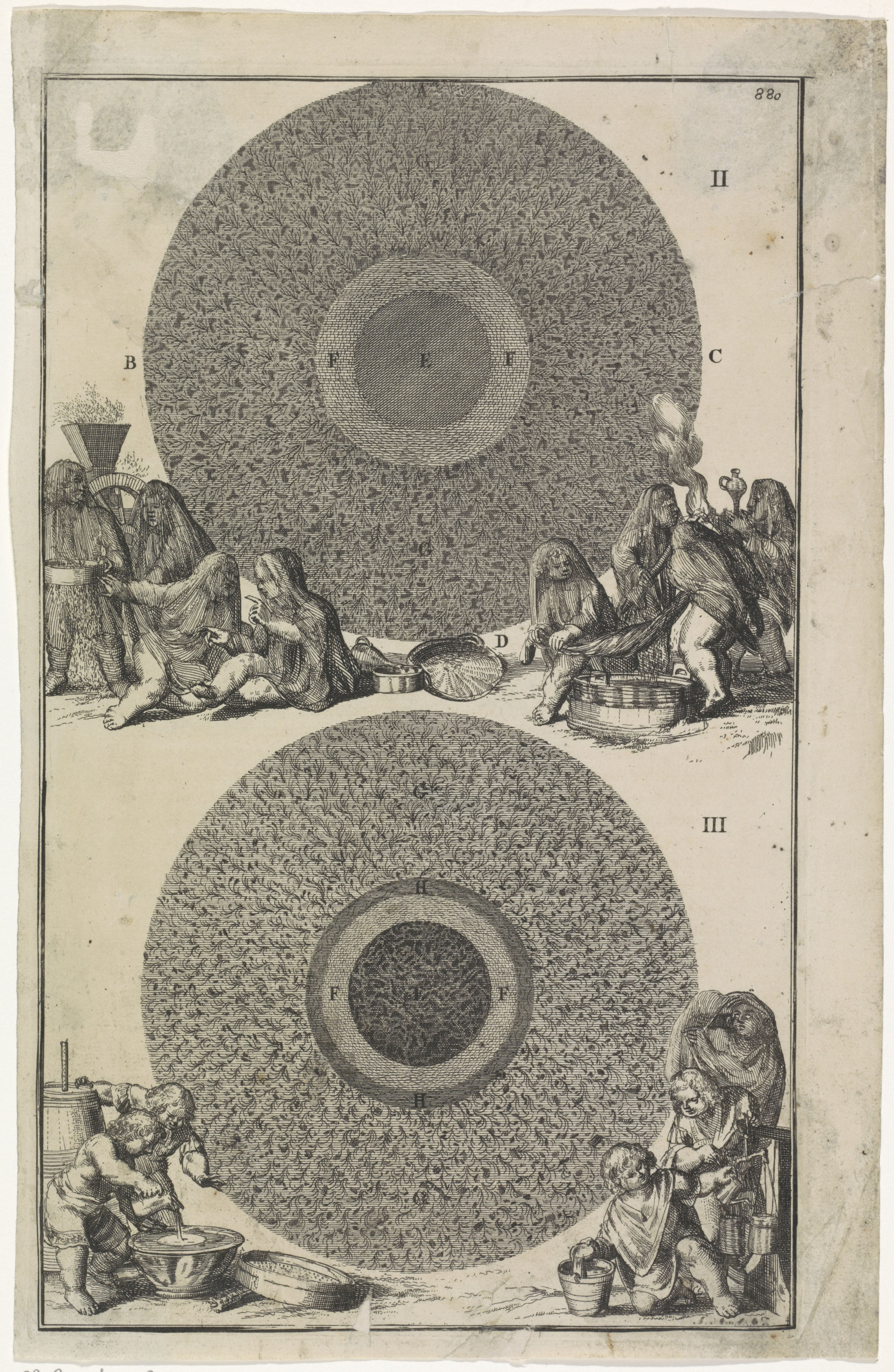
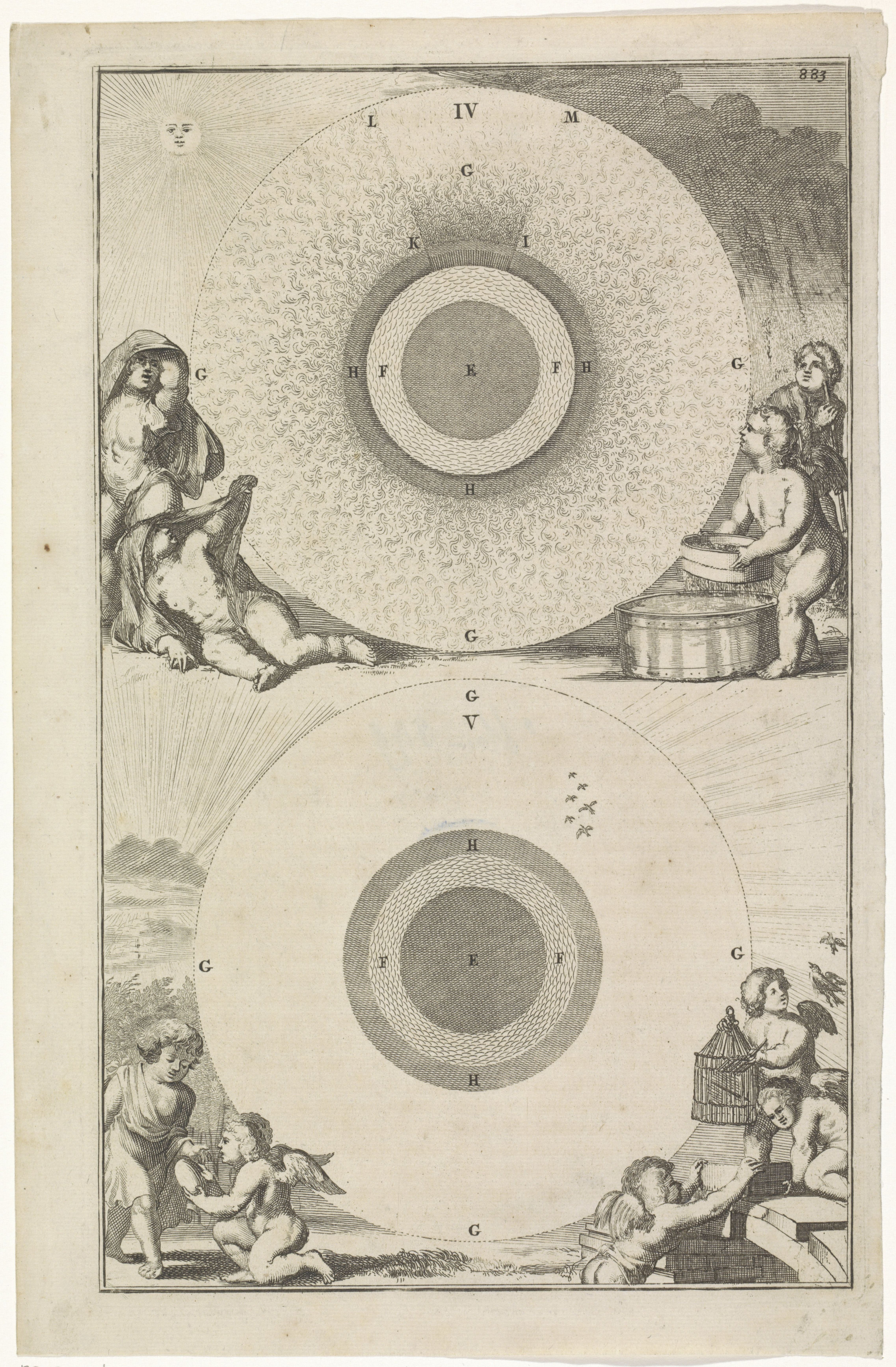
Four close-ups from Willem Goeree’s Voor-bereidselen tot de Bijbelse Wijsheid (Amsterdam, 1690). Collection Rijksmuseum Amsterdam, RP-P-1916-398 and RP-P-1916-399.
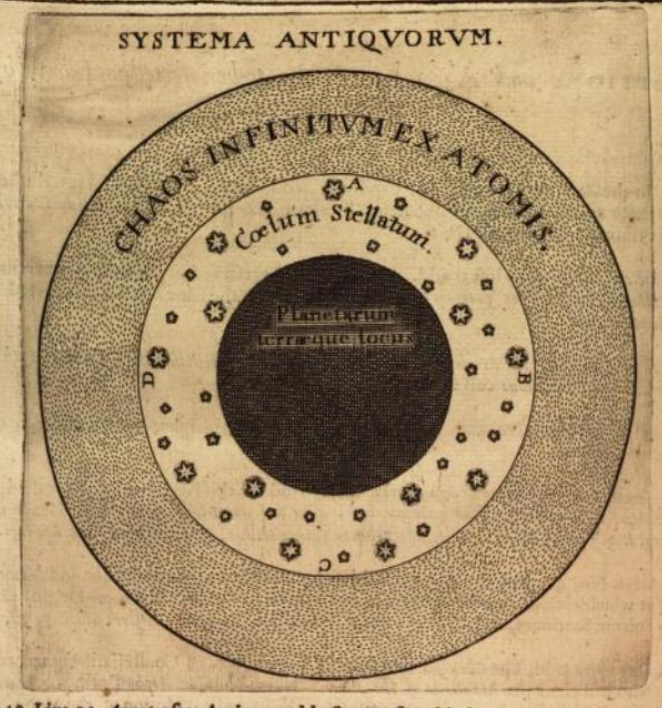
‘Systema Antiquorum’ from Sherburne, The sphere of Marcus Manilius (London, 1675). Google Books.
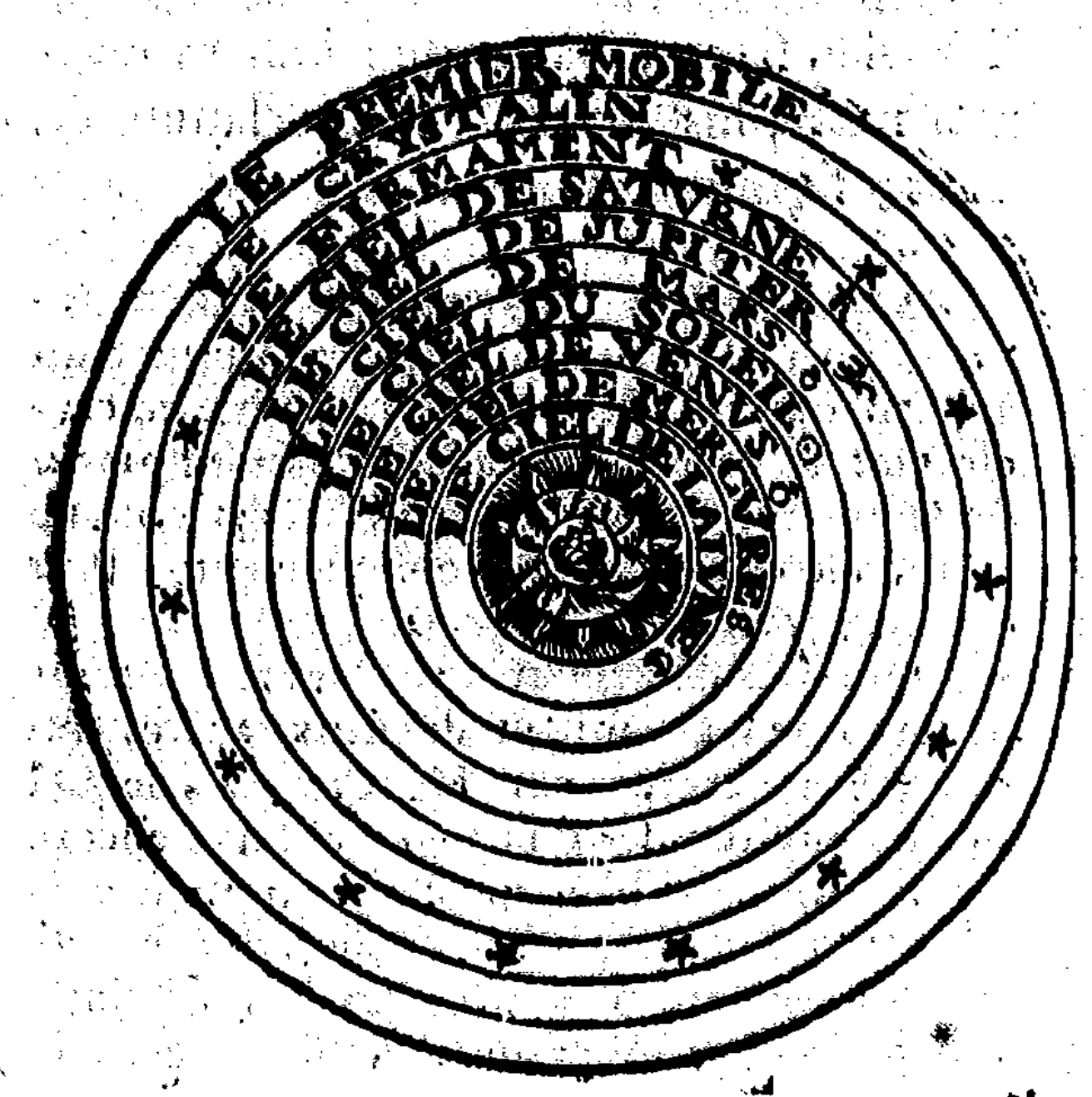
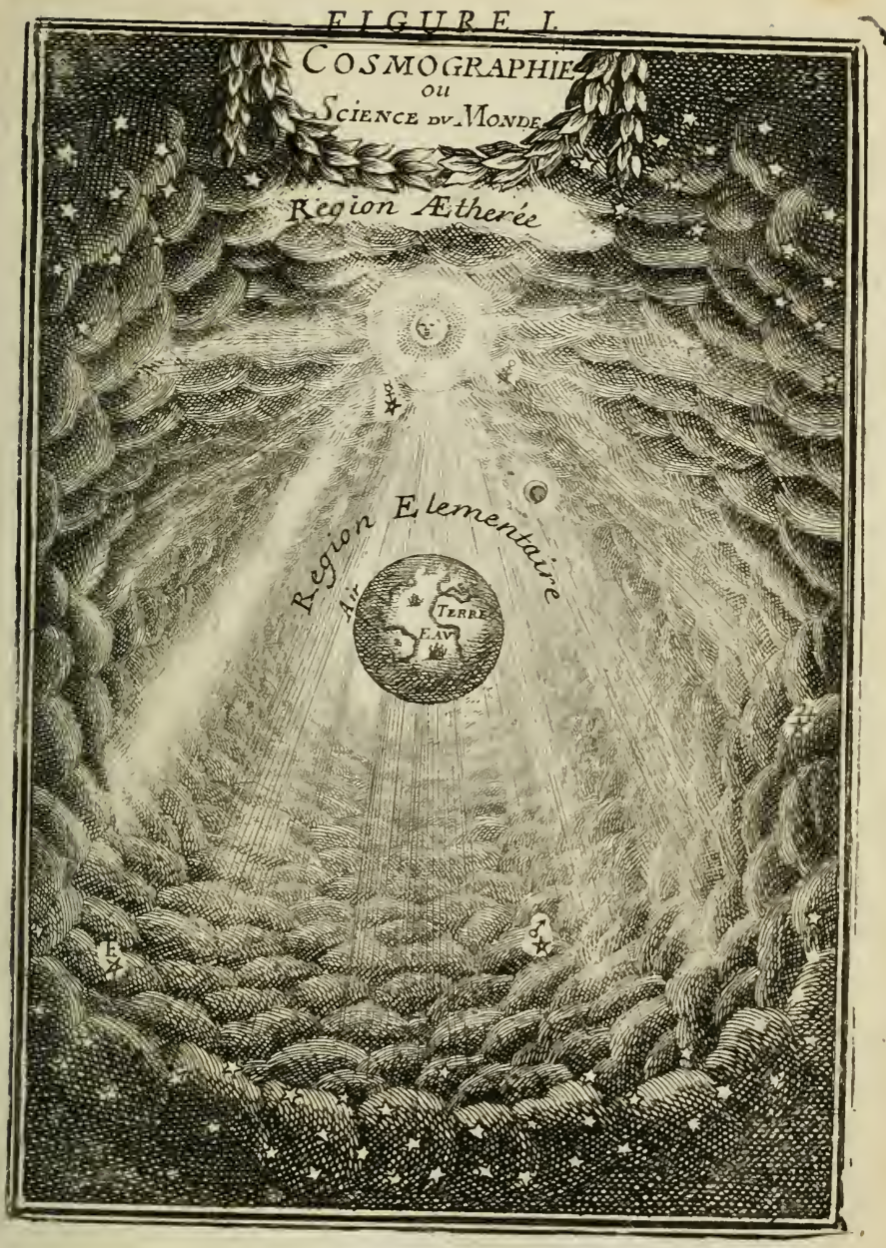
Cosmic section from Boulanger’s Traite de la sphere (‘nouvelle edition’; Paris, 1688). Source gallica.bnf.fr / BnF.
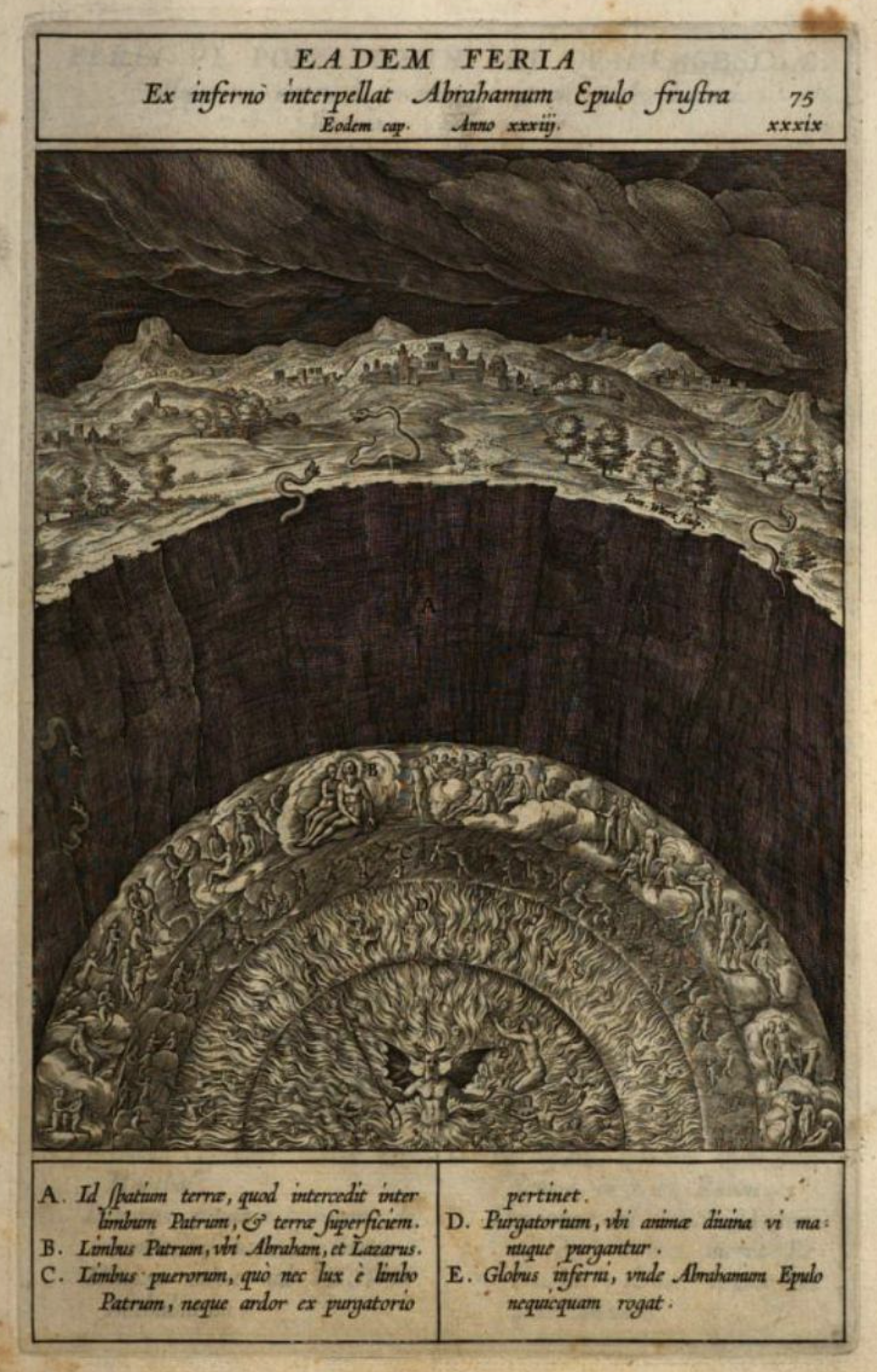
View of Hell, from Hieronimus Nadal, Evangelicae Historiae Imagines […] (Antwerp, 1593). Google Books.
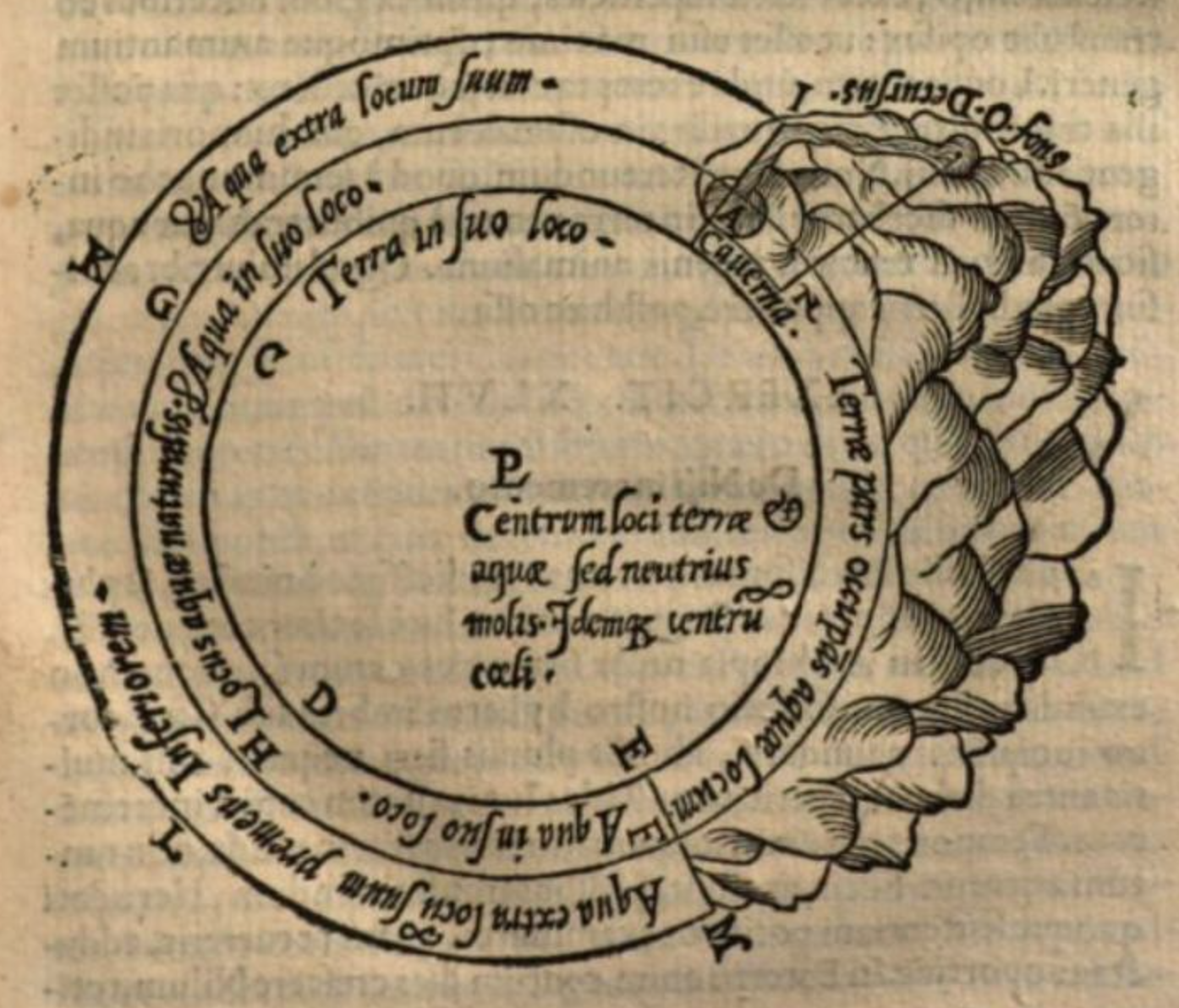
Section of the earth from Julius Caesar Scaliger’s Exotericarum Exercitationum Liber XV. De Subtilitate, ad Hieronymum Cardanum (Paris, 1557). Google Books.
Section from Theodore Barin, Le Monde Naissant, ou La Création du monde, démontrée par des principes tres simples & tres conformes à l’histoire de Moyse Genes, chap. I & II (Brussles, 1722 [1st ed. Utrecht, 1686]). Source gallica.bnf.fr / BnF.
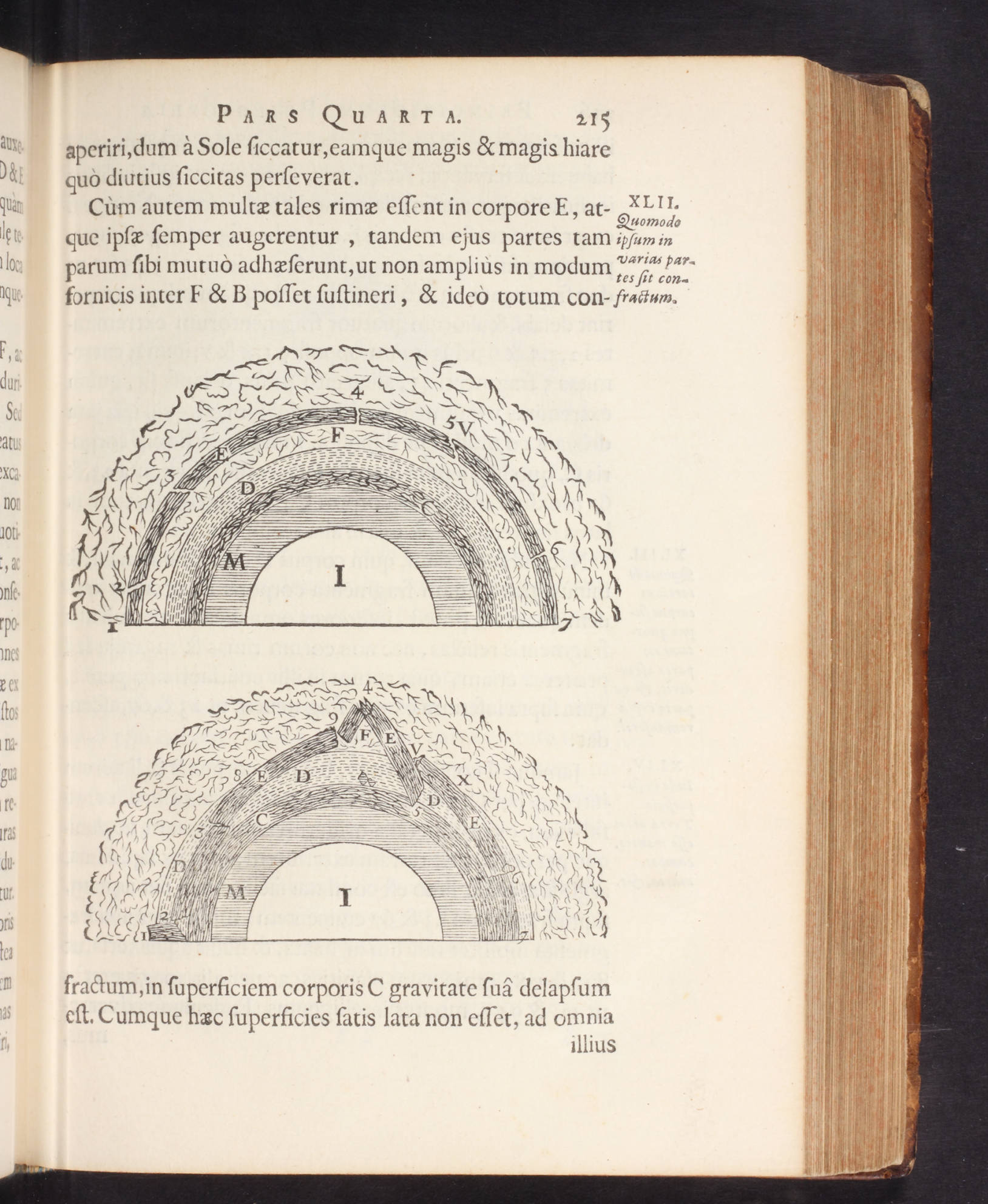
Two semi-sections from René Descartes’ Principia Philosophiae (Amsterdam, 1644). Courtesy of The Linda Hall Library of Science, Engineering & Technology, B1863.
Cross-section of the earth. From Nicolaas Hartsoeker, Principes de Physique (Paris, 1696). Courtesy of The Linda Hall Library of Science, Engineering & Technology, QC19.H215 1696.
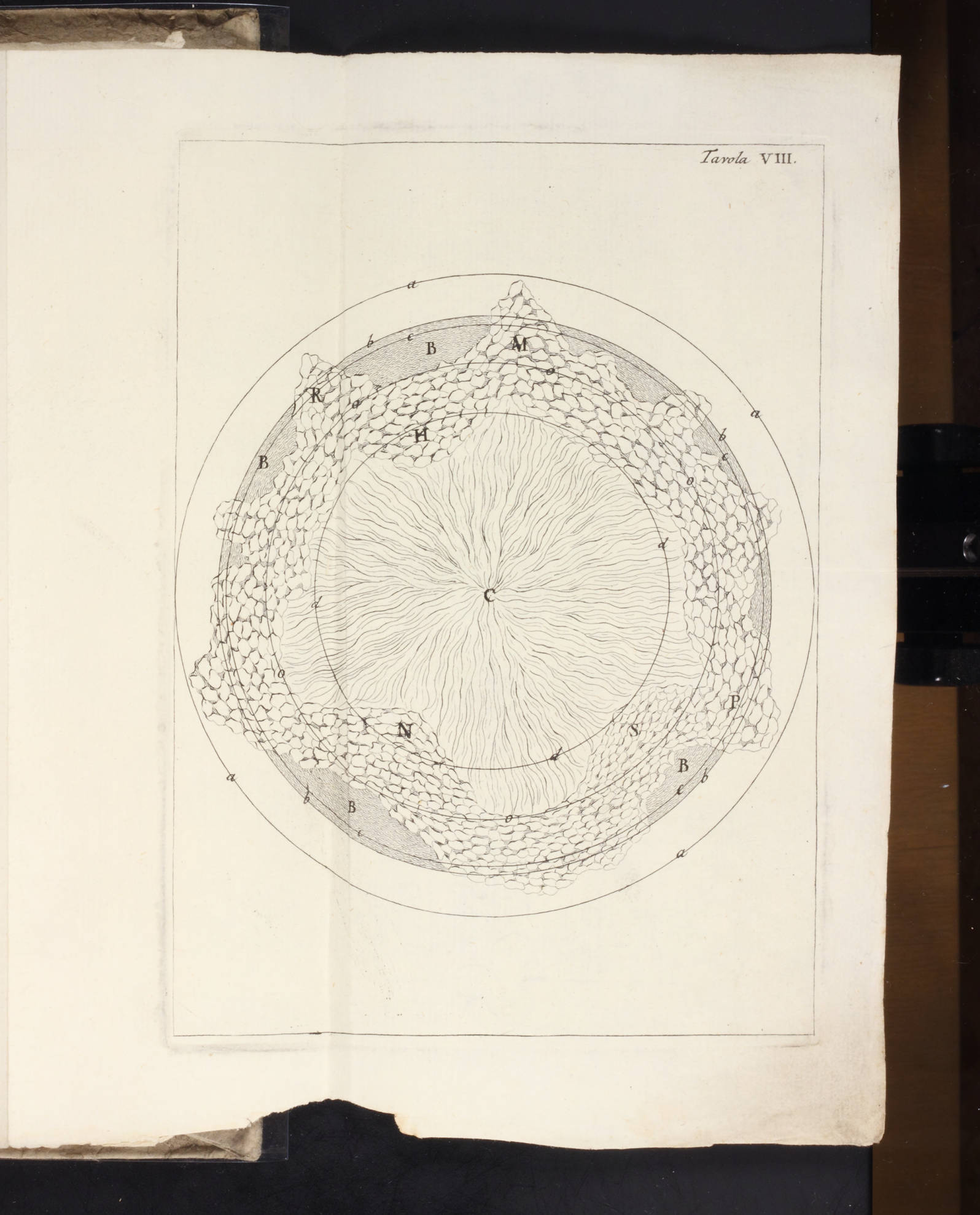
The 8th section from Anton Lazzaro Moro’s De’ Crostacei e degli altri marini corpi (Venice, 1740). Courtesy of The Linda Hall Library of Science, Engineering & Technology, QE501 .M62 1740.
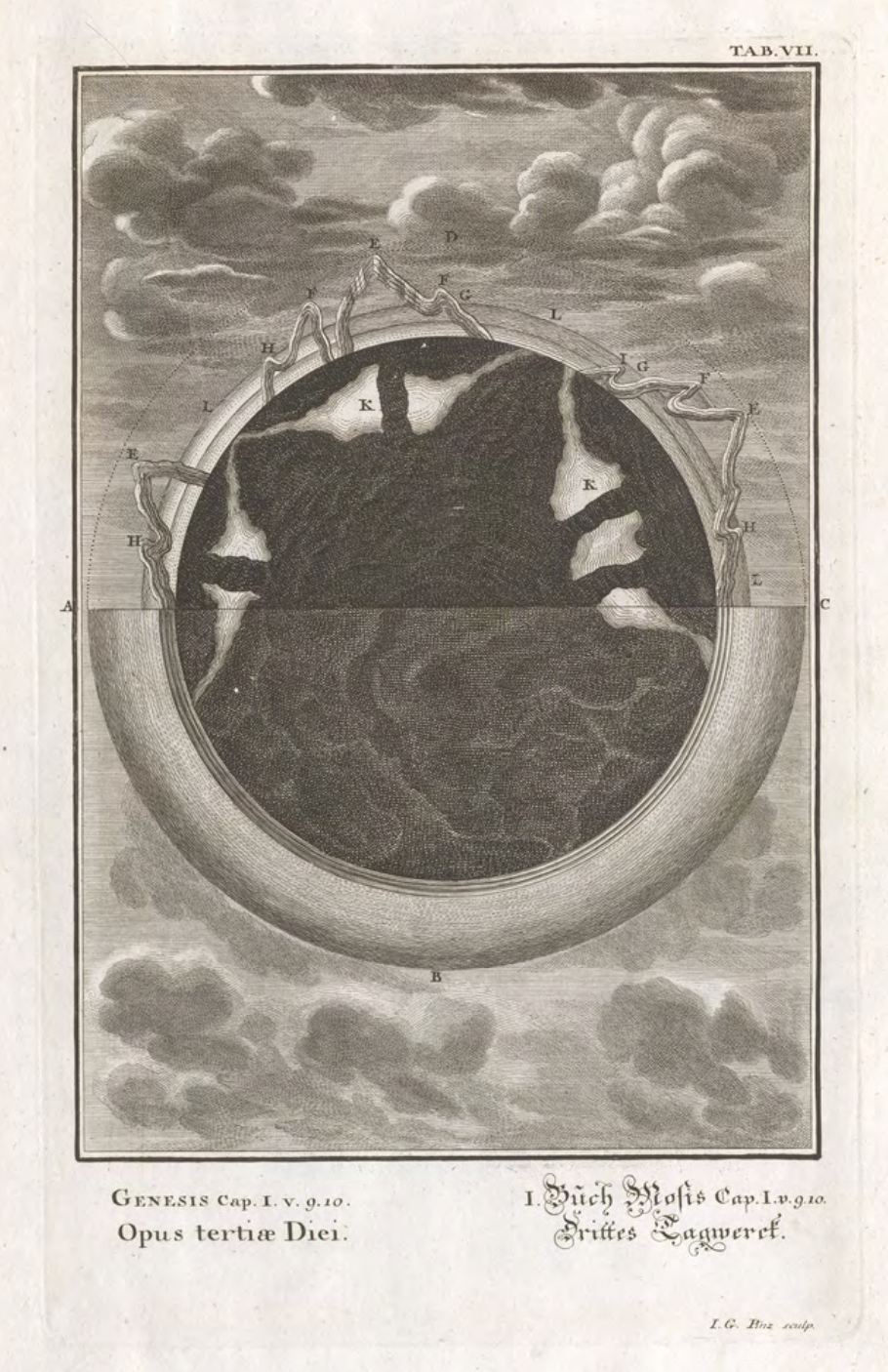
Scheuchzer’s seventh Tabula, from his Physica Sacra (Augsburg and Ulm, 1731). Courtesy of The Linda Hall Library of Science, Engineering & Technology, QH41.S339 1731.
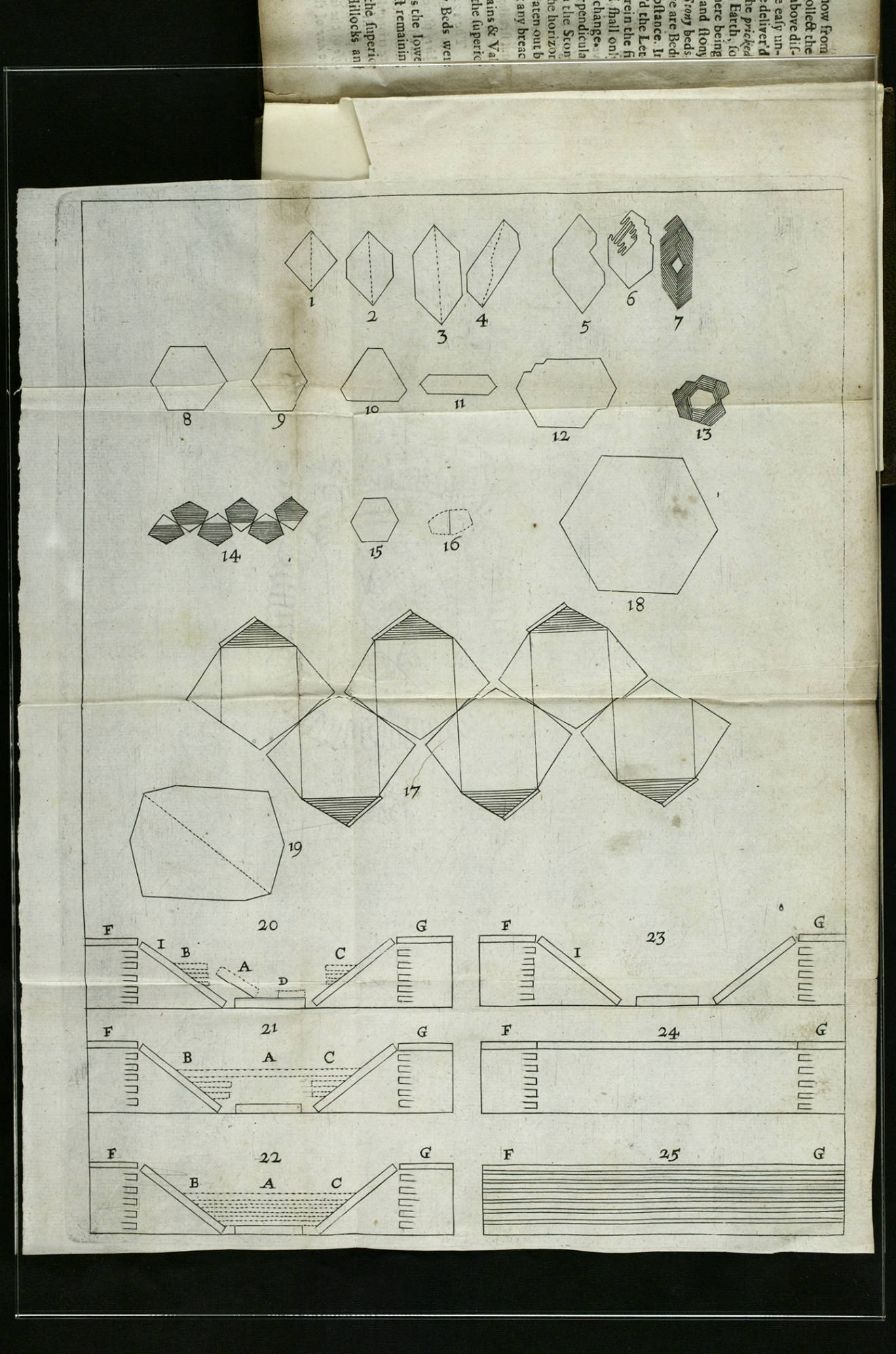
Close-up of the sections in Steno’s Prodromus. Nicolaus Steno, The Prodromus to a Dissertation concerning Solids Naturally Contained within Solids (Henry Oldenburg trans.; London, 1671). Courtesy of The Linda Hall Library of Science, Engineering & Technology, QE709 .S8 1671.
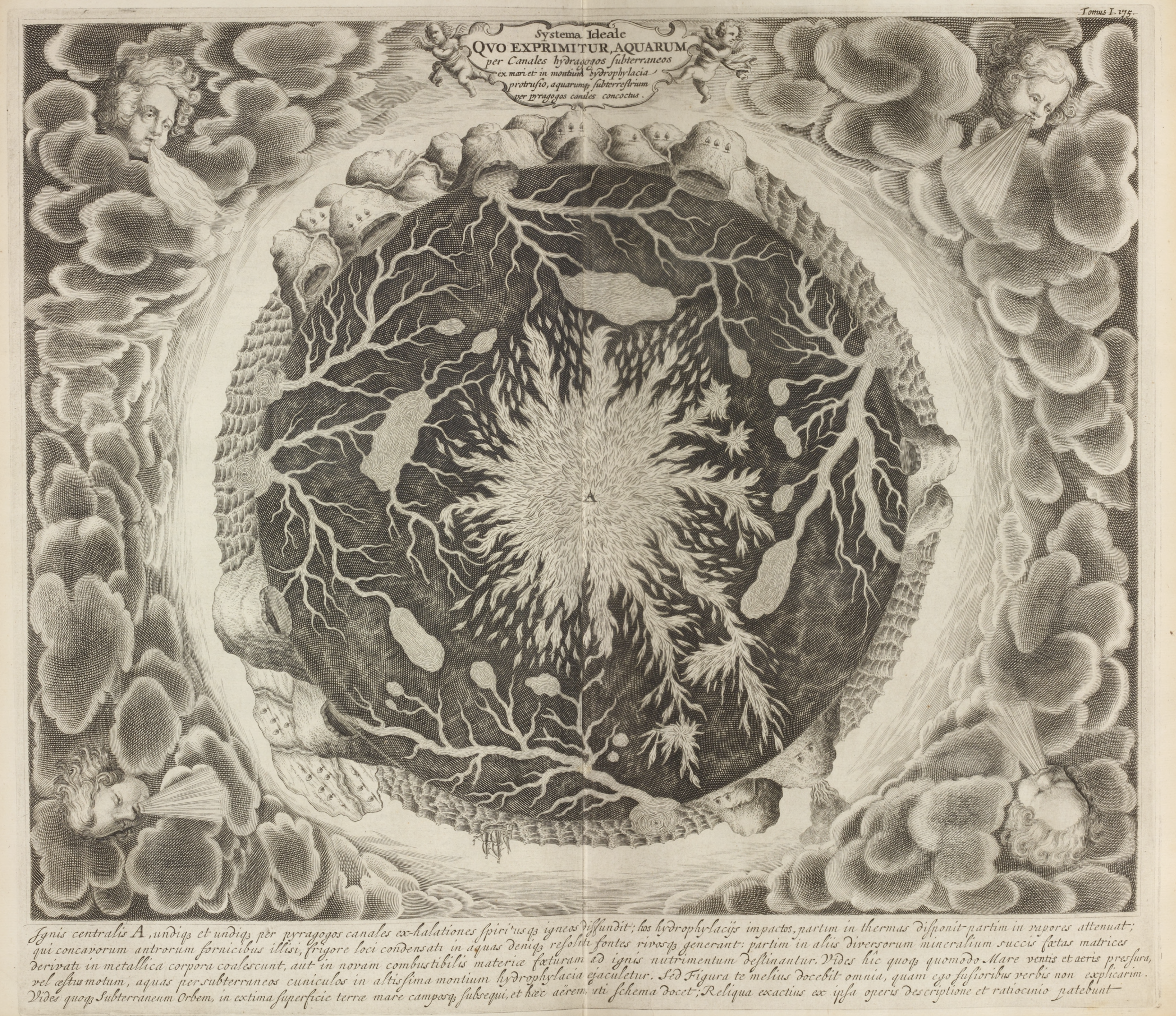
Ideal scheme of the earth. From Athanasius Kircher, Mundus Subterraneus (1665). Courtesy of The Linda Hall Library of Science, Engineering & Technology, Q155.K6 1665.
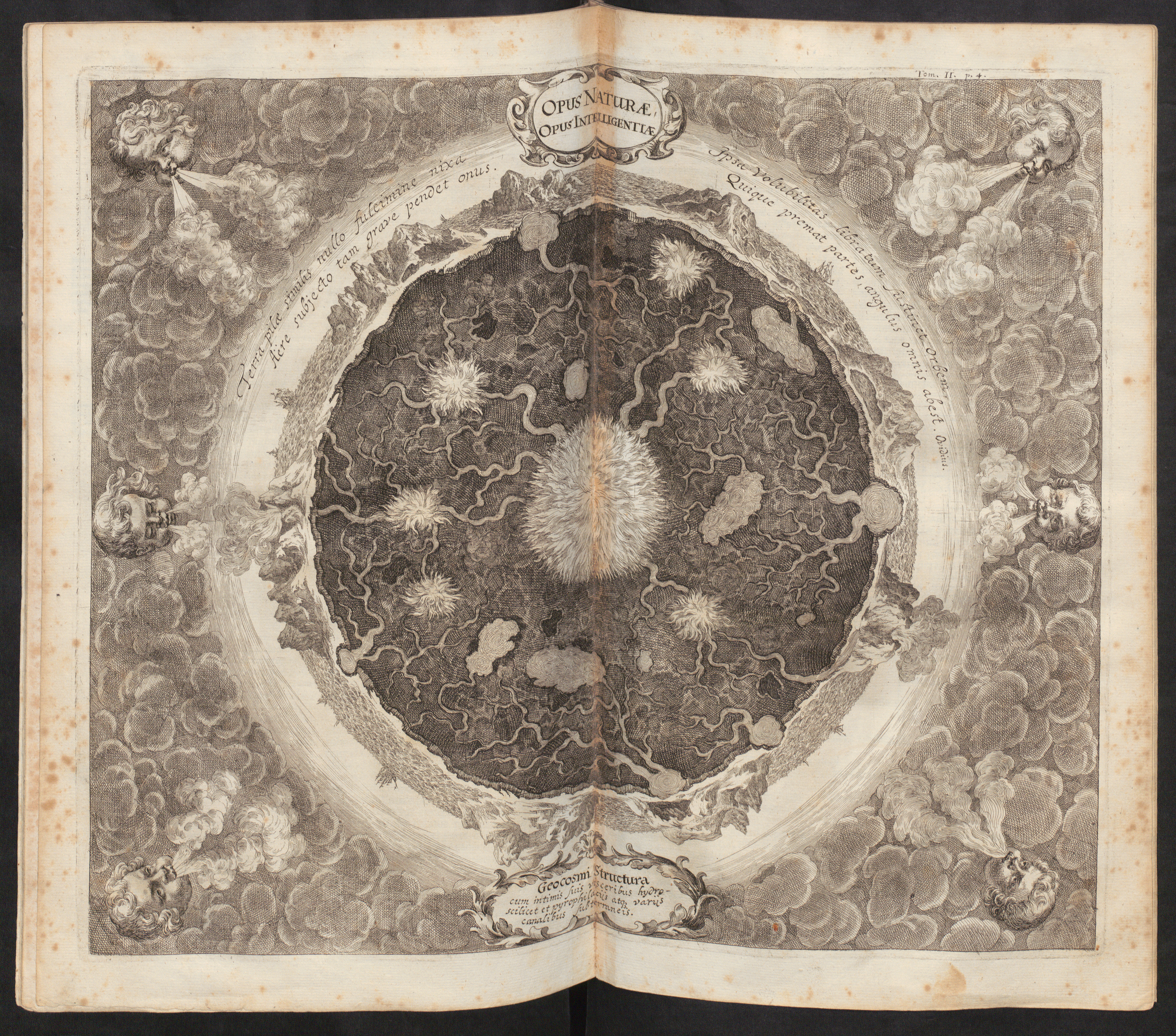
Section of the earth from Johannes Zahn’s Specula physico-mathematico-historica (Nuremberg, 1696). ETH-Bibliothek Zürich Rar 2298.
Close-up of Section of the earth from Johannes Zahn’s Specula physico-mathematico-historica (Nuremberg, 1696). ETH-Bibliothek Zürich Rar 2298.
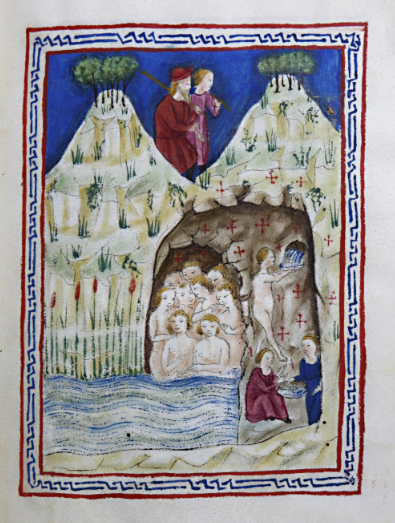
Scene from Pierre d’Eboli, De Balneis Puteolanis (Before 1494). Valencia, Biblioteca Històrica, MS. 838 f°4v, Wikimedia Commons.
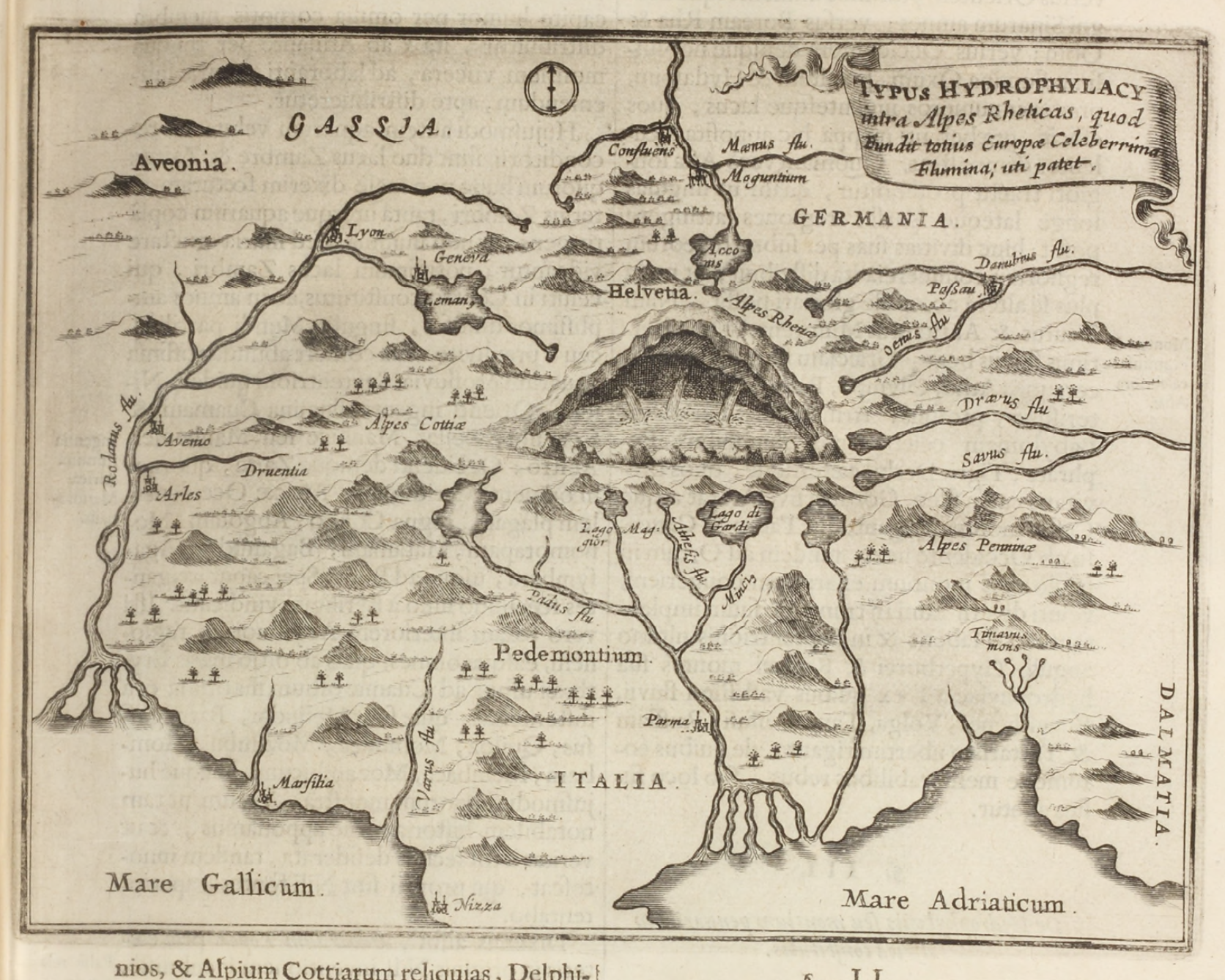
Close up from ‘Typus Hydrophylaci’ from Athanasius Kircher, Mundus Subterraneus (Amsterdam, 1664-5). Courtesy of The Linda Hall Library of Science, Engineering & Technology, Q155 .K6 1665.
Plate from Johannes Herbinius’ Dissertationes de Admirandis Mundi Cataractis […] (Amsterdam, 1678). KB/ProQuest/EEB 368 F 13.
Not included due to copyright restrictions.
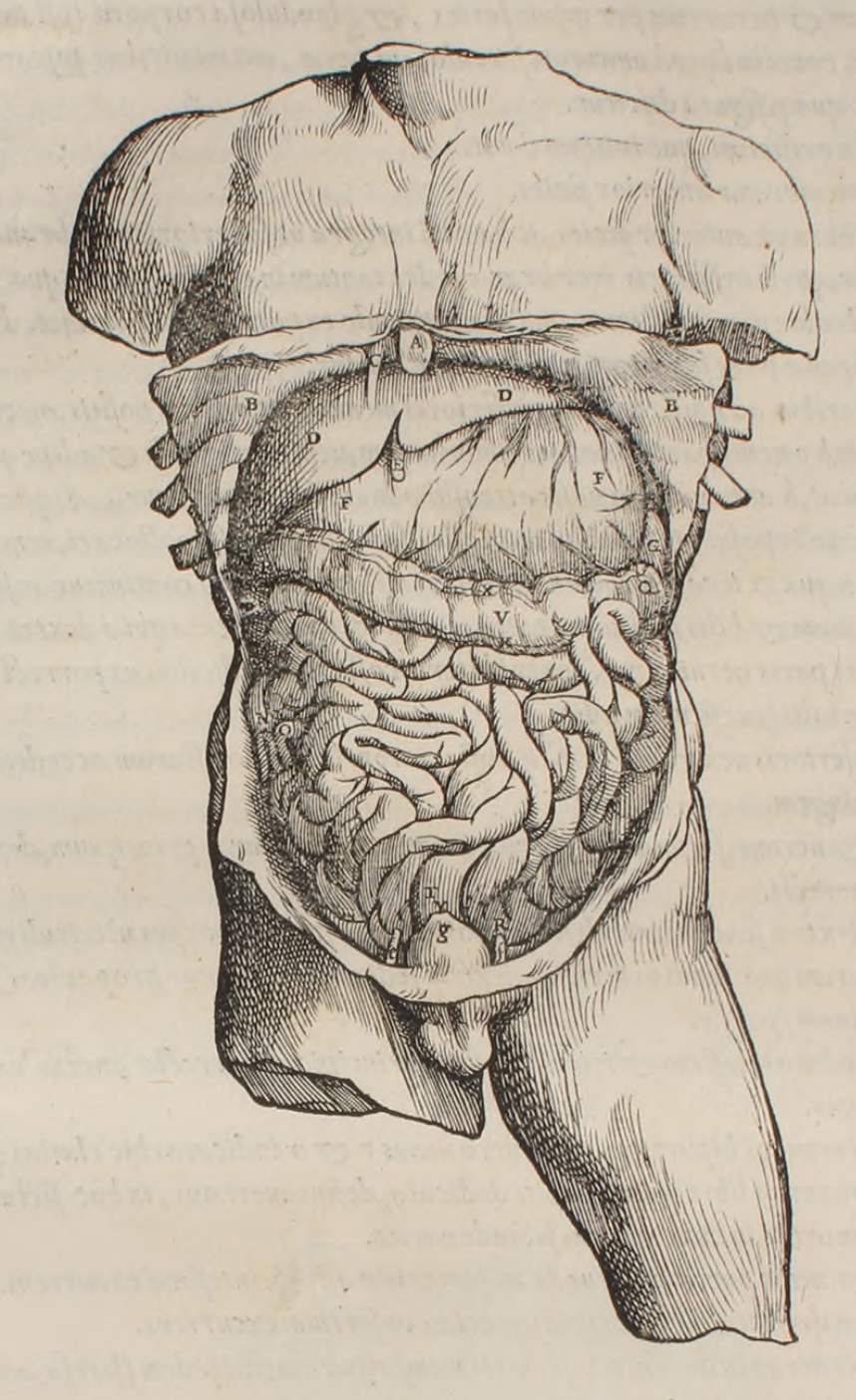
Plate from Andreas Vesalius’ De Humani Corporis Fabrica Libri Septem (Basel, 1543). Courtesy of The Linda Hall Library of Science, Engineering & Technology, QM21 .V395 1543.
Three sections from Hartmann Schedel’s Registrum huius operis libri cronicarum cu figuris et ymagibus ab inicio mundi (Nuremberg, 1493). Bayerische Staatsbibliothek/Münchener Digitalisierungs Zentrum, rar. 287.
Not included due to copyright restrictions.
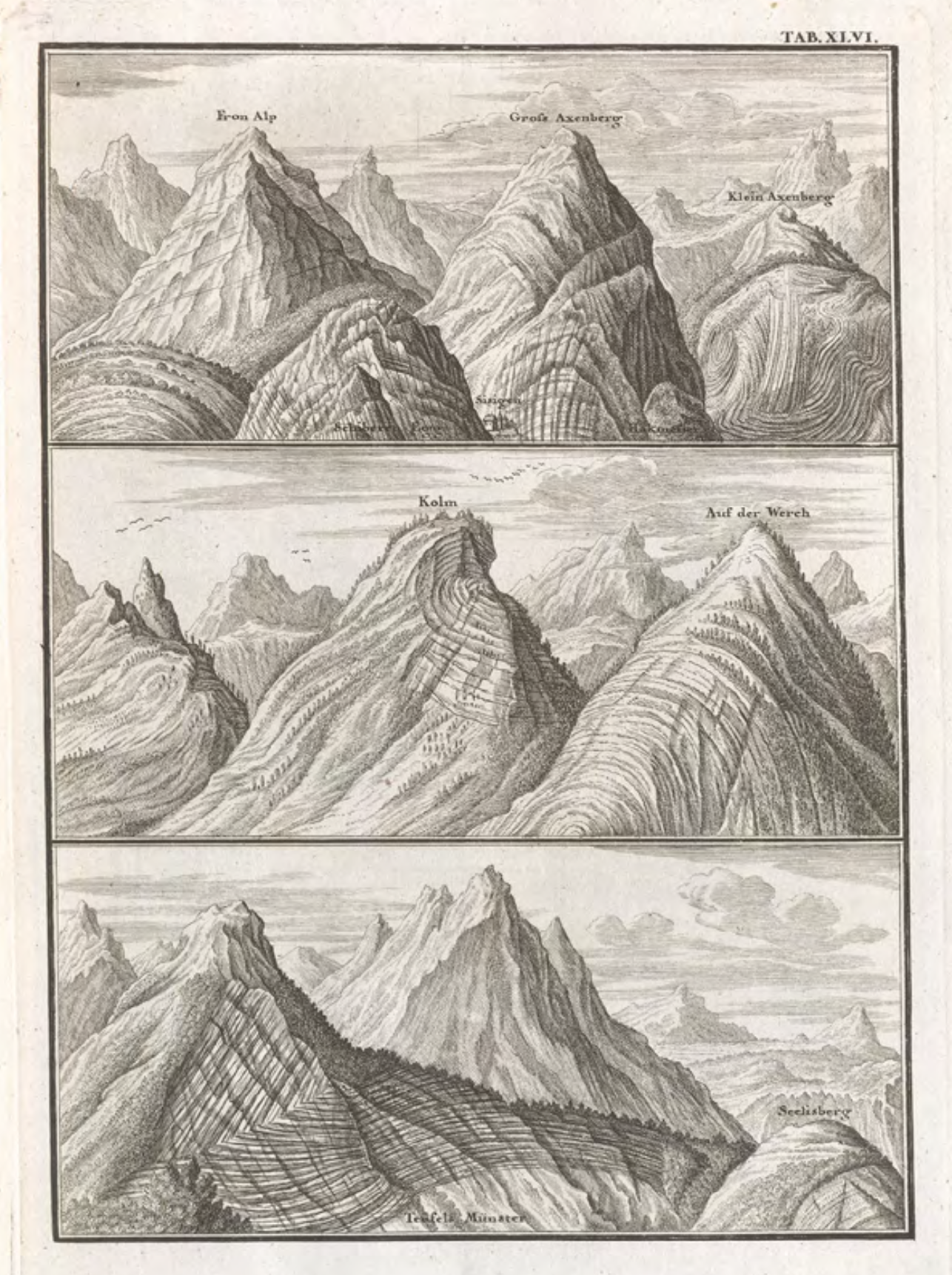
Sections depicting mountains, from Johann Jakob Scheuchzer’s Physica Sacra (Augsburg and Ulm, 1731-5). Courtesy of The Linda Hall Library of Science, Engineering & Technology, QH41.S339 1731.
Plate from Allain Manesson Mallet, Description de l’univers vol. i (Paris, 1683). The Internet Archive.
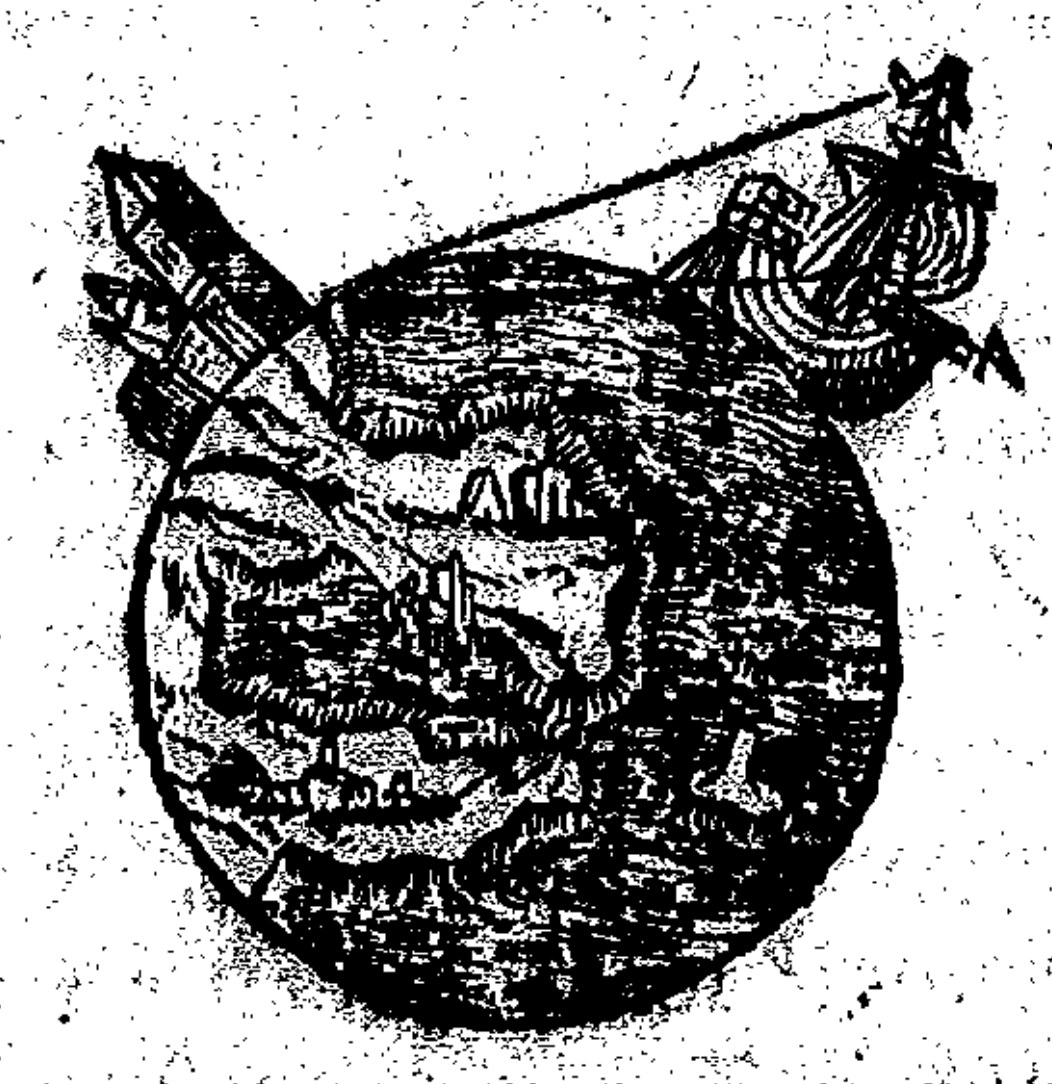
Depiction of the earth and a boat’s perspective from Boulanger’s Traite de la sphere (‘nouvelle edition’; Paris, 1688). Source gallica.bnf.fr / BnF.
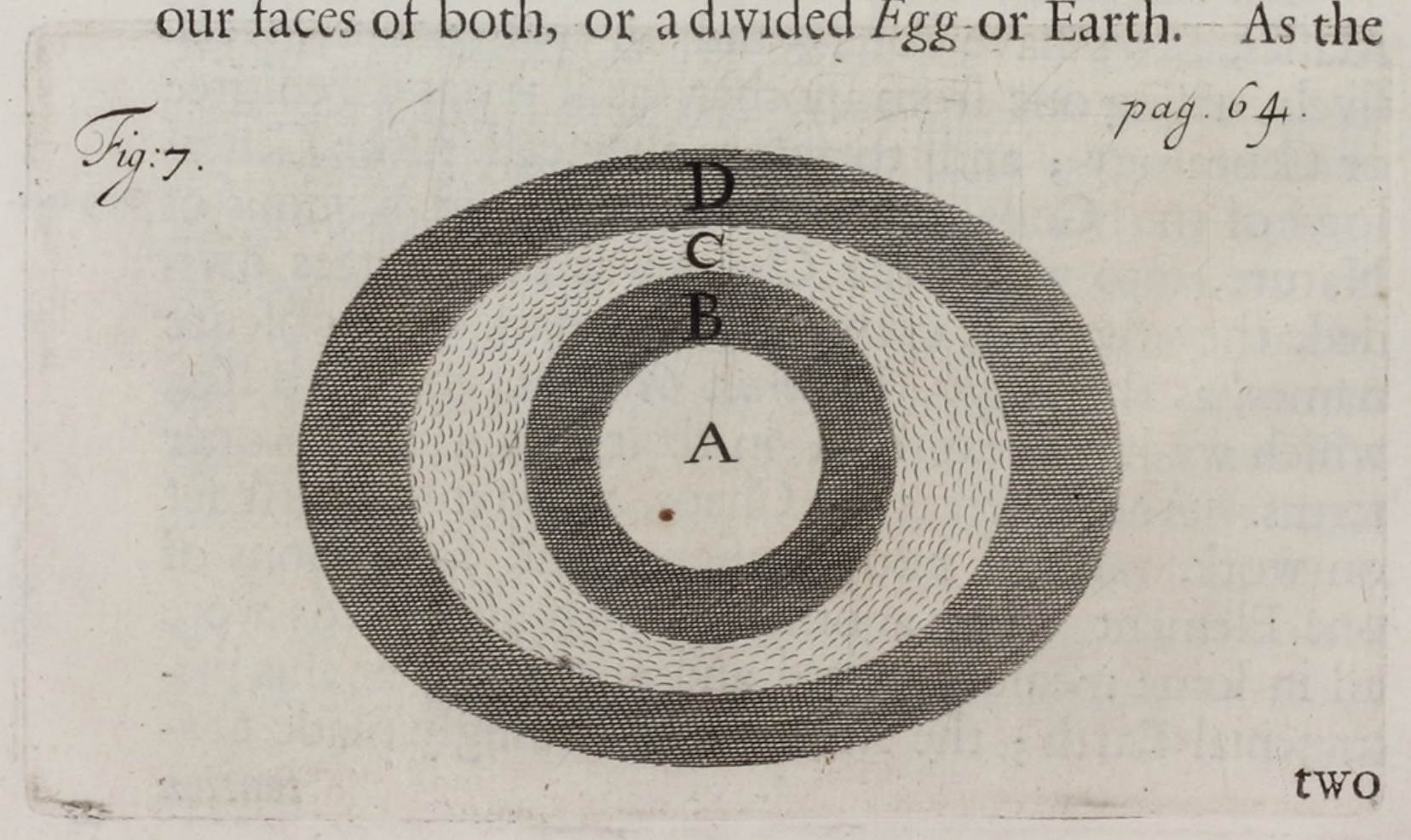
Seventh figure from Thomas Burnet’s Sacred Theory of the Earth (London, 1684) depicting an egg. Courtesy of The Linda Hall Library of Science, Engineering & Technology, QB981.B8 1684 v.1.
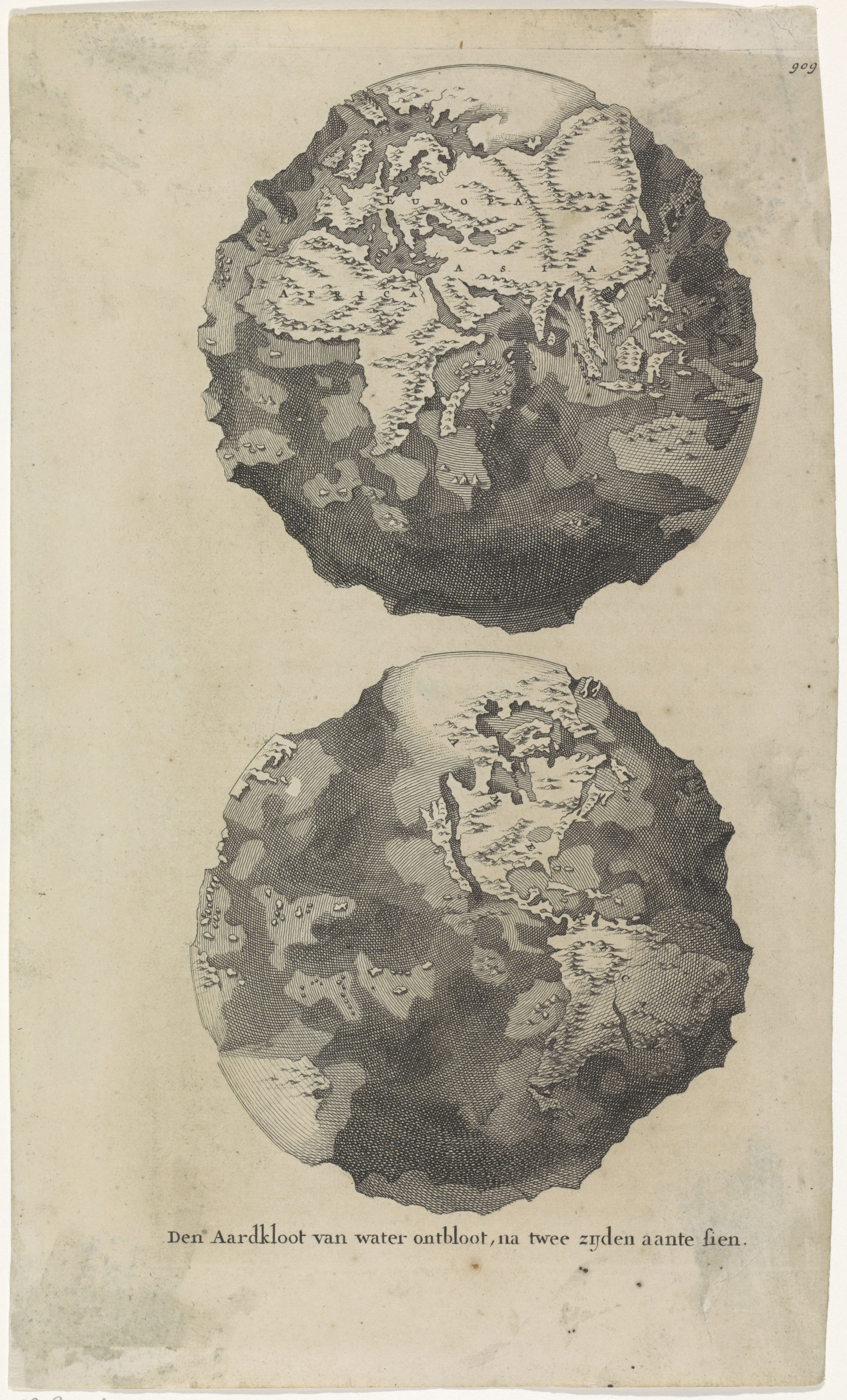
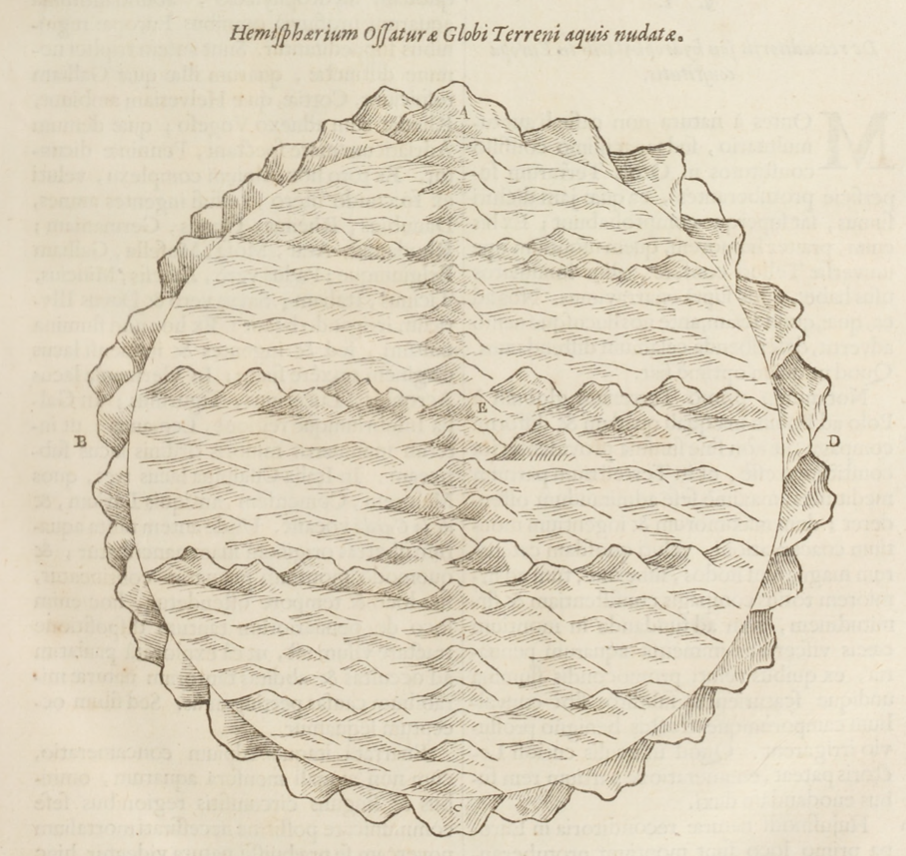
‘Den Aardkloot van water ontbloot, na twee zyden aante sien’. From Willem Goeree, Voor-Bereidselen tot de Bybelse Wysheid (Amsterdam, 1690). Rijksmuseum Amsterdam, RP-P-1916-404.
Climatological model earths from Thomas Burnet’s Sacred Theory of the Earth (London, 1684). Courtesy of The Linda Hall Library of Science, Engineering & Technology, QB981.B8 1684 v.1.
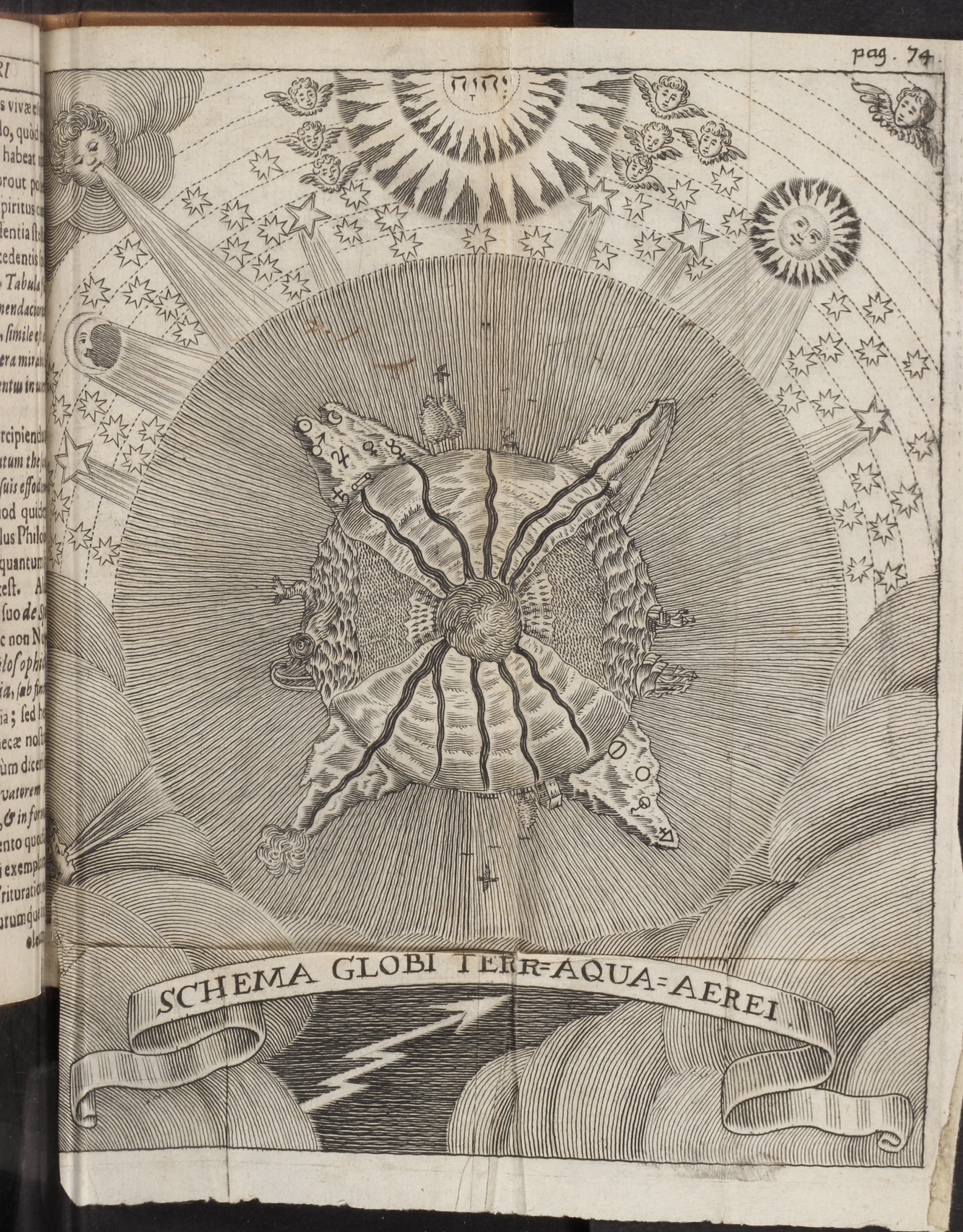
‘Schema Globi Terr=Aqua=Aeri’. From Joachim Becher, Opuscula Chymica RarioraI (Nuremberg and Altorf, 1719). Courtesy of The Linda Hall Library of Science, Engineering & Technology, QD27.B4165 1719.
Earth without water from Athanasius Kircher, Mundus Subterraneus (1665). Courtesy of The Linda Hall Library of Science, Engineering & Technology, Q155.K6 1665.
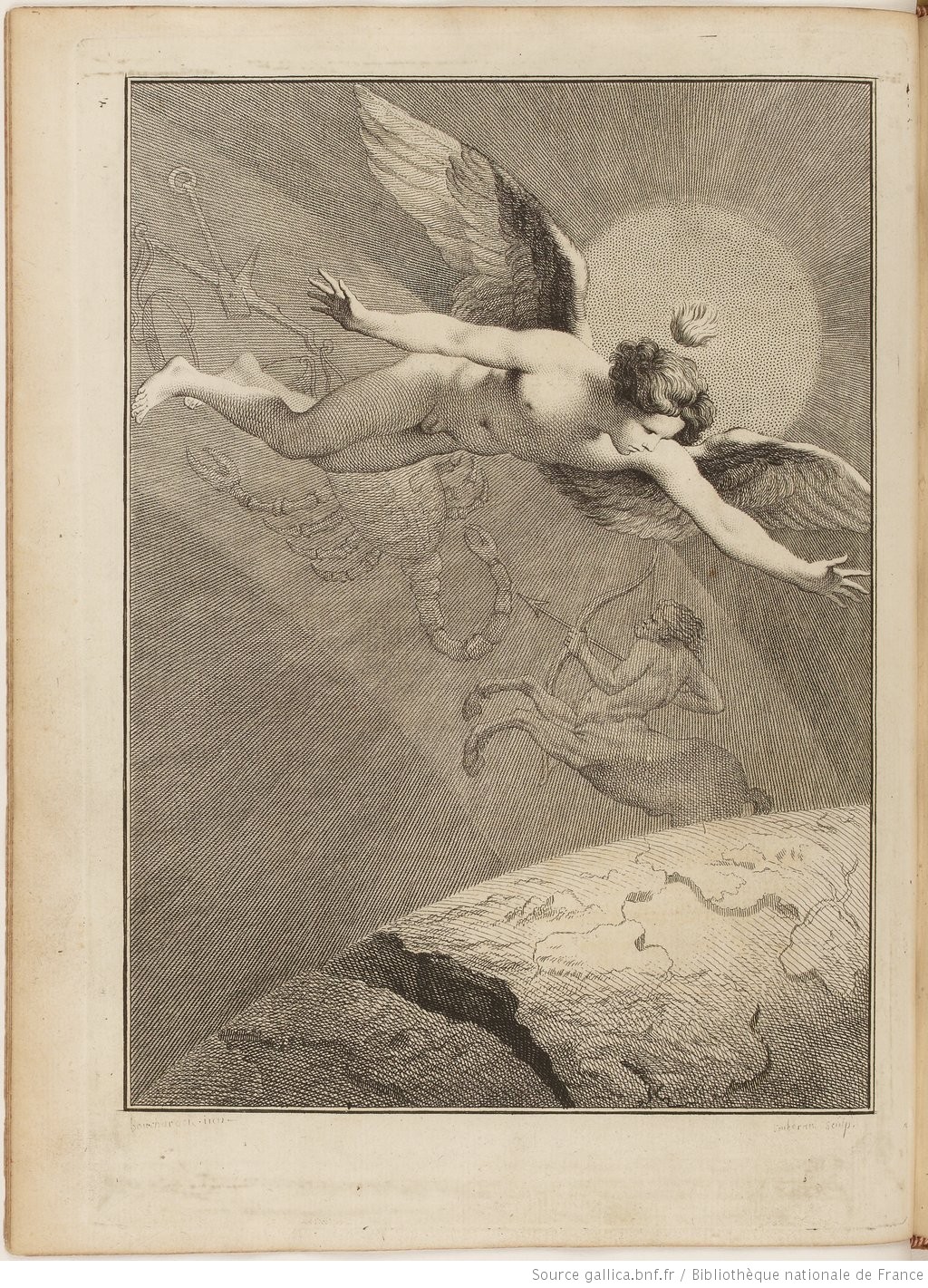
View of the earth, the light of reason, and the signs of the zodiac from Georges-Louis Leclerc Comte de Buffon, Histoire Naturelle, Générale et Particulière, avec la Description du Cabinet du Roy vol. i (Paris, 1749). Source gallica.bnf.fr / BnF.
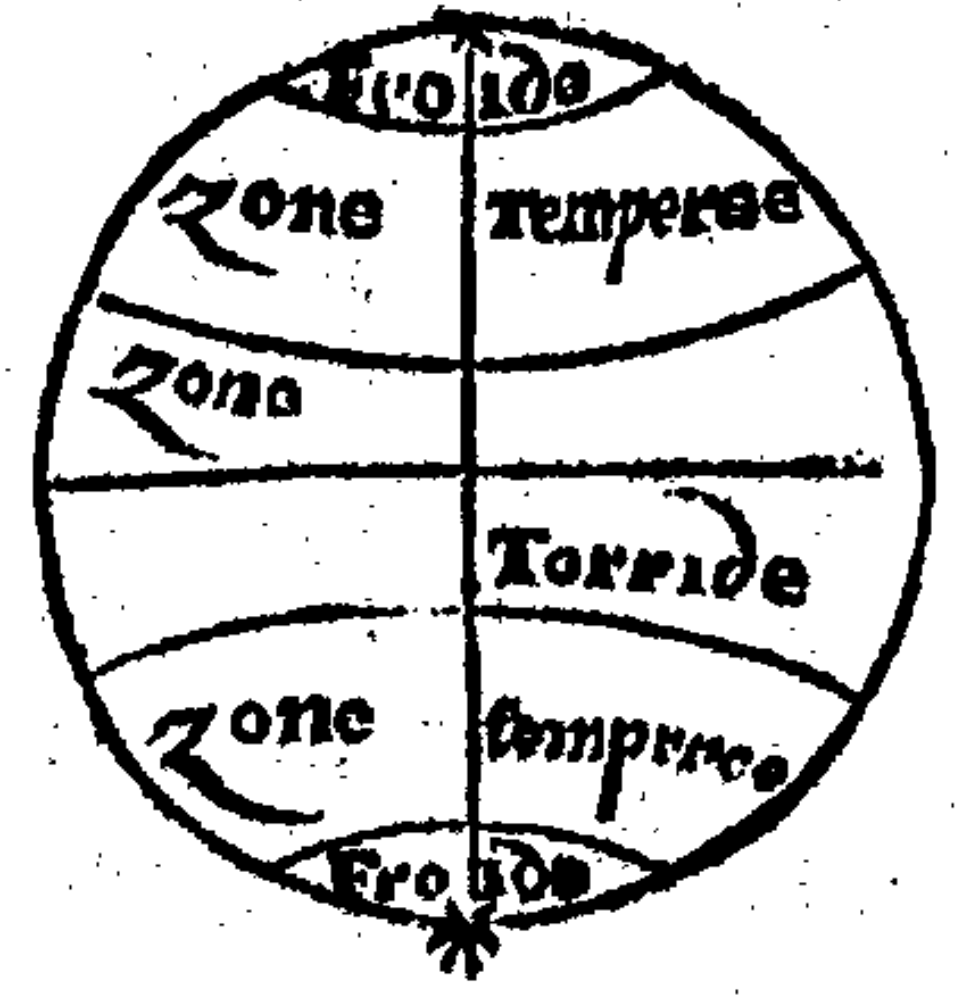
Climatic zones from Boulanger’s Traite de la sphere (‘nouvelle edition’; Paris, 1688). Source gallica.bnf.fr / BnF.
Burnet’s plate depicting three earths from Thomas Burnet’s Sacred Theory of the Earth (London, 1684). Courtesy of The Linda Hall Library of Science, Engineering & Technology, QB981.B8 1684 v.1.
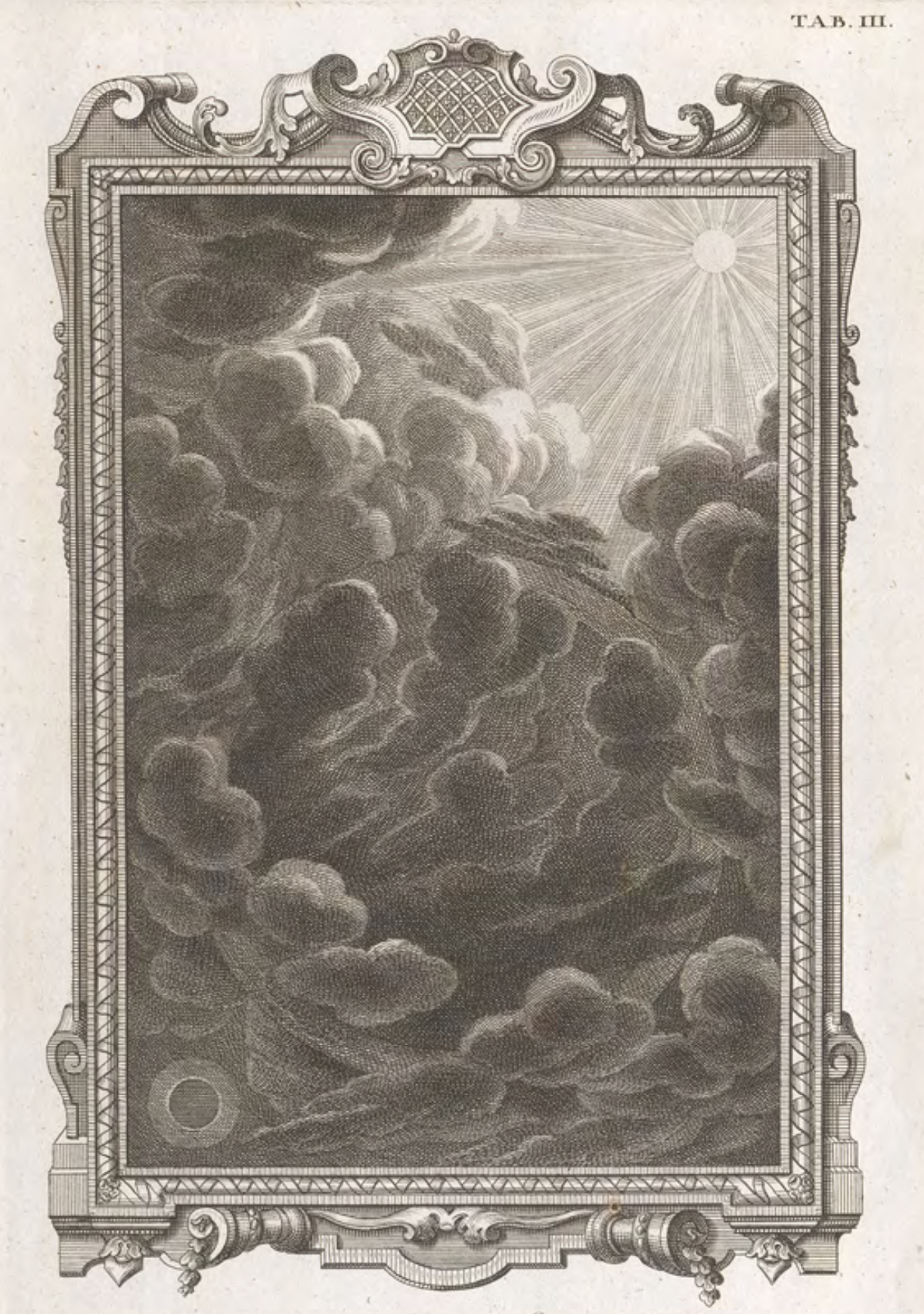
Table III from Johann Jakob Scheuchzer’s Physica Sacra (Augsburg and Ulm, 1731). Courtesy of The Linda Hall Library of Science, Engineering & Technology, QH41.S339 1731.
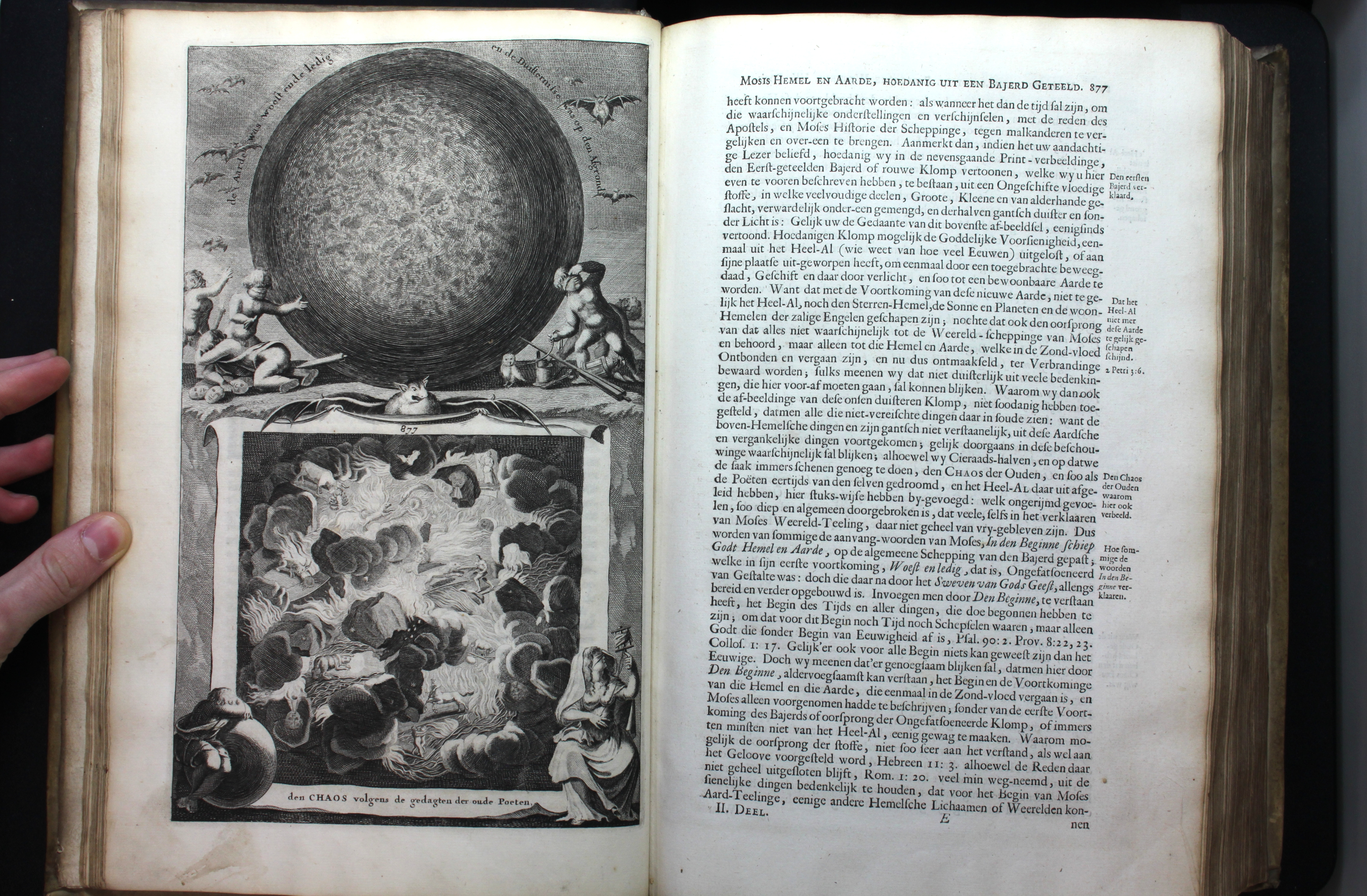
Two views of creation from Willem Goeree, Voor-Bereidselen tot de Bybelse Wysheid (Amsterdam, 1690). Universiteitsbibliotheek Vrije Universiteit Amsterdam, XI.05177.-.
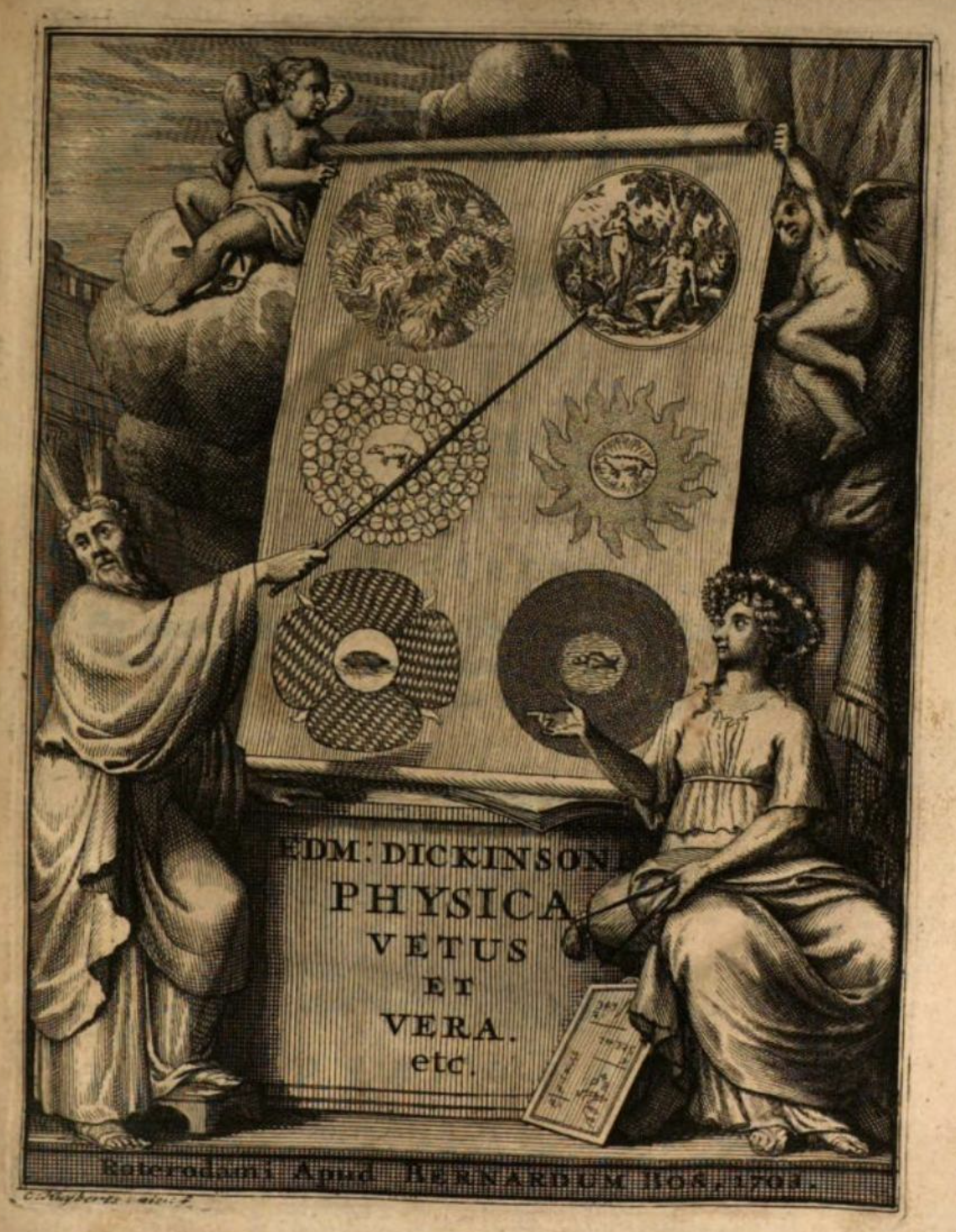
Titlepage of Edmund Dickinson’s Physica Vetus et Vera: sive Tractatus de Naturali Veritate Hexemeri Mosaici (Rotterdam, 1703). Google Books.
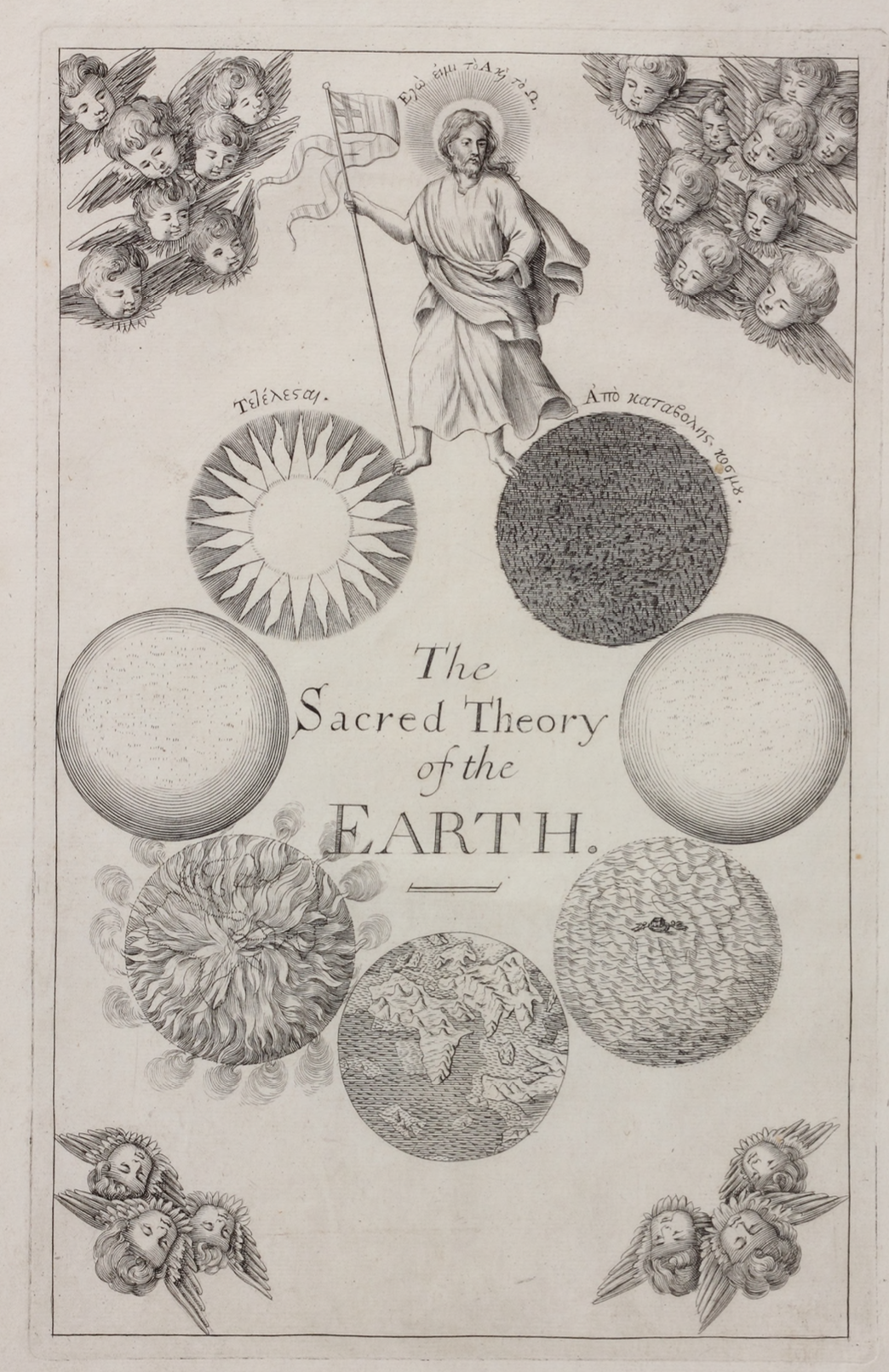
Title page from Thomas Burnet’s Sacred Theory of the Earth (London, 1684). Courtesy of The Linda Hall Library of Science, Engineering & Technology, QB981.B8 1684 v.1.
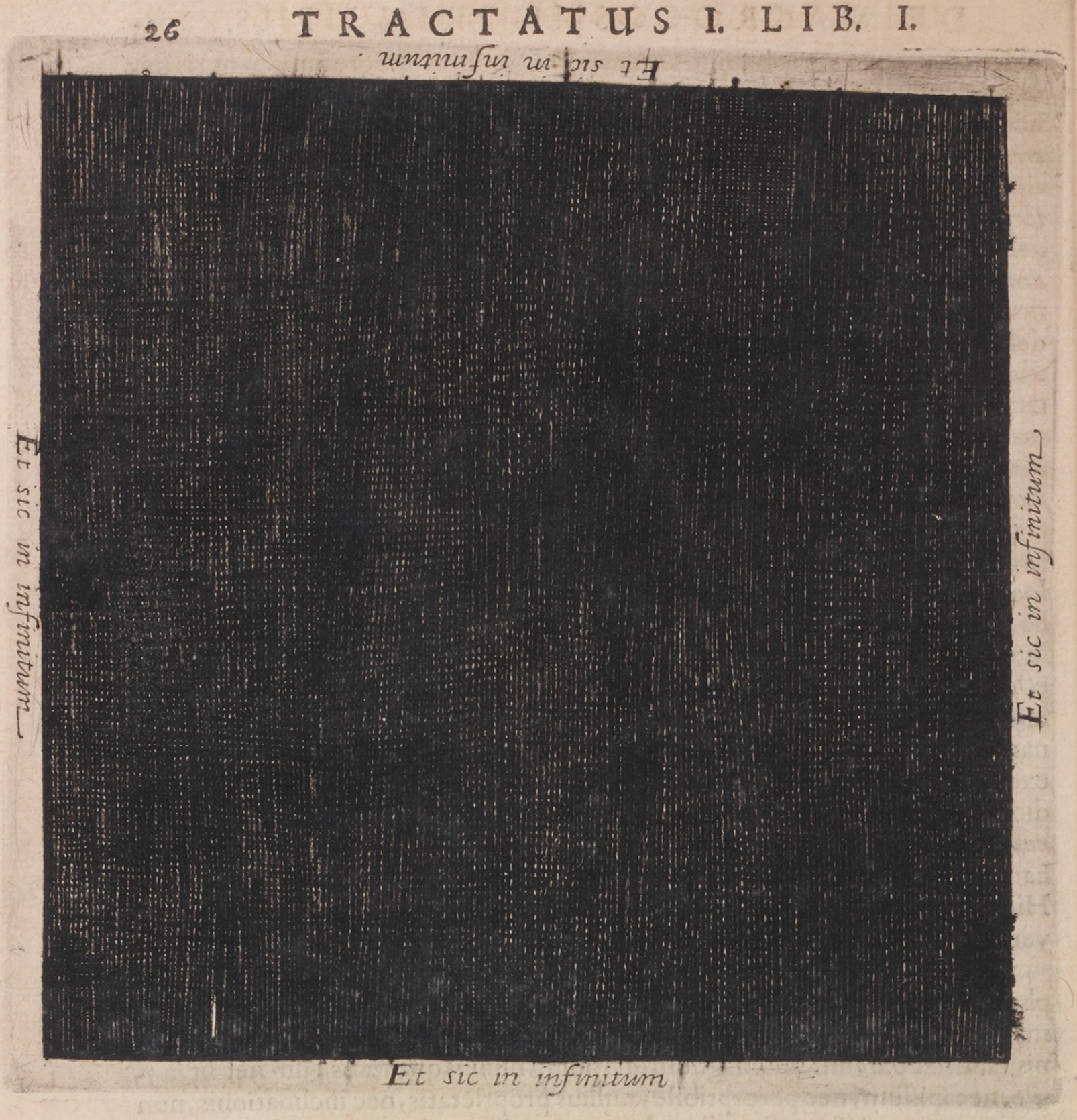
Black square depicting the beginning of Creation from Robert Fludd’s Utriusque Cosmi (Oppenheim, 1618). Courtesy of The Linda Hall Library of Science, Engineering & Technology, BD500 .F58 1617 quarto.
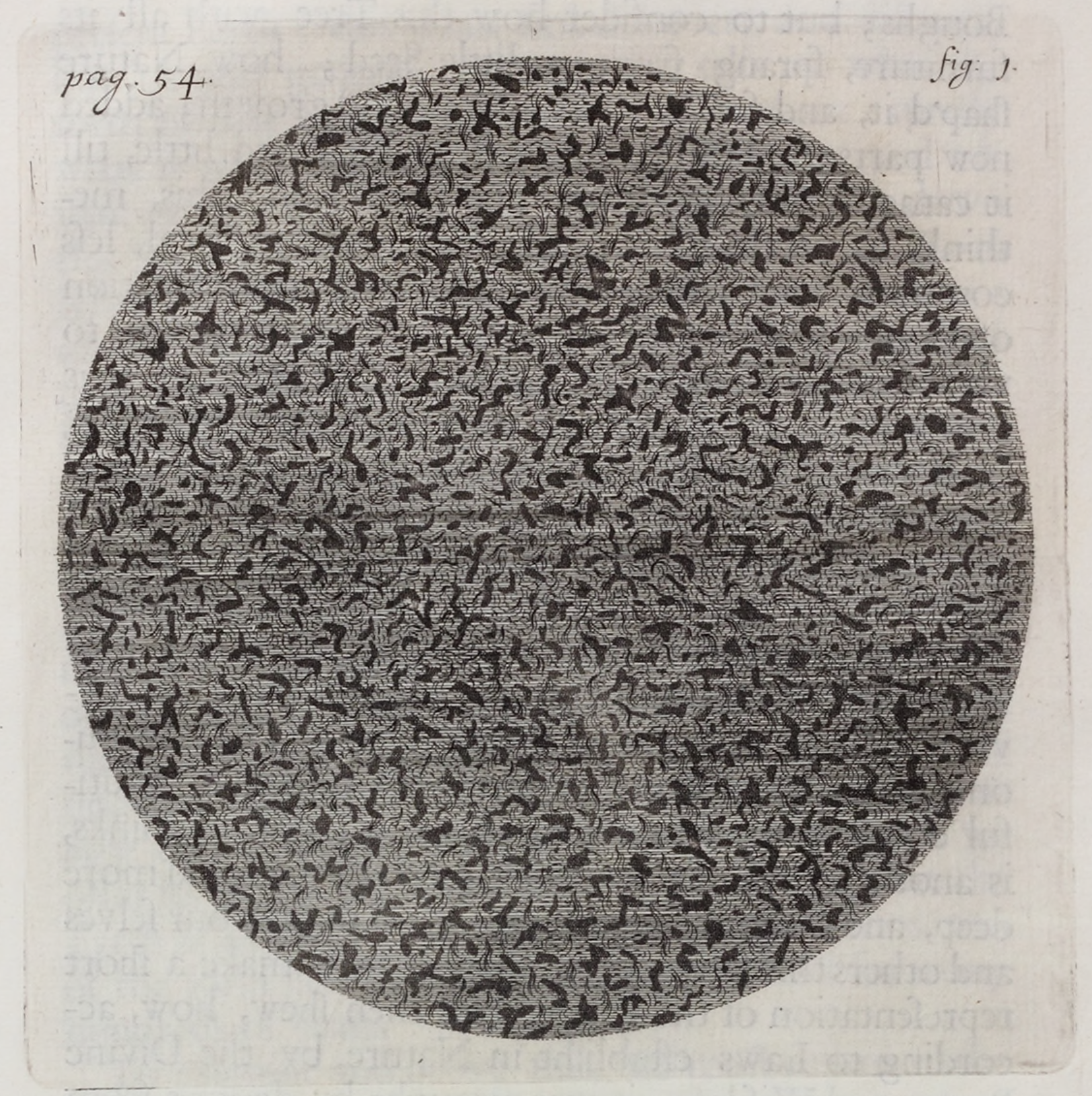
The earth in a state of chaos from Thomas Burnet’s Sacred Theory of the Earth (London, 1684). Courtesy of The Linda Hall Library of Science, Engineering & Technology, QB981.B8 1684 v.1.
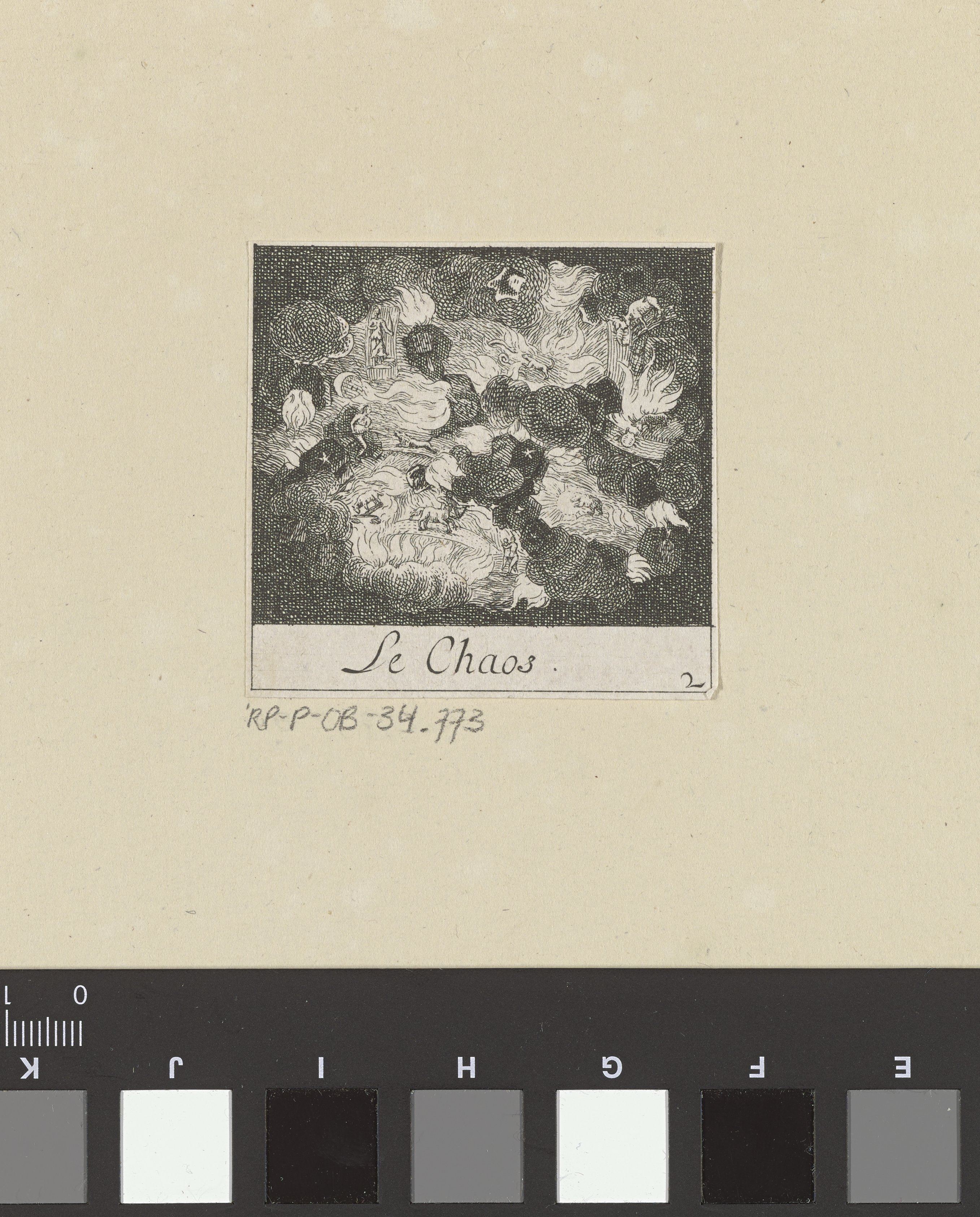
Playing card entitled ‘Le Chaos’ by Stefano Della Bella, ca. 1620-1664. Collection Rijksmuseum Amsterdam, RP-P-OB-34.773.
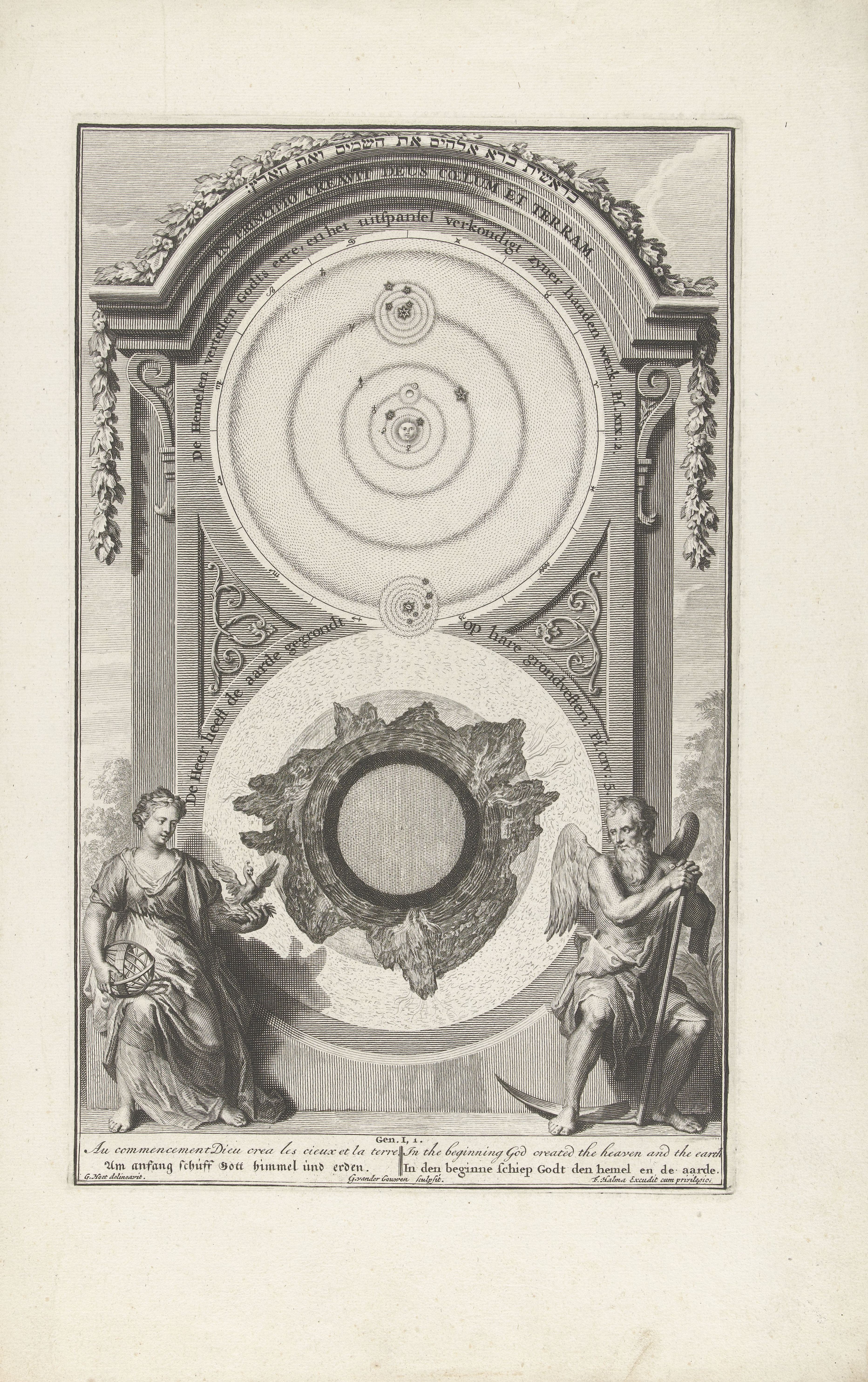
In the beginning God created the heaven and the earth, from Pieter de Hondt’s Taferelen der Voornaamste Geschiedenissen uit het Oude en Nieuwe Testament (The Hague, 1728). Collection Rijksmuseum Amsterdam, RM RP-P-1934-137.
 Imagining the Earth